
Notocactus rudibuenekeri
Notocactus rudibuenekeri
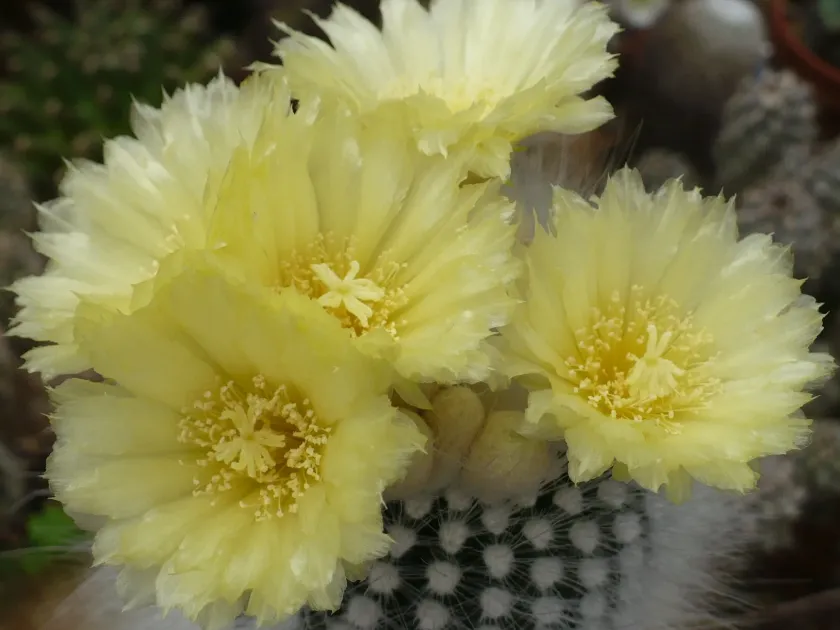
Description
Sowing dates
Sowing seeds of Notocactus rudibuenekeri is best performed in the early spring months. March and April provide the necessary light intensity and warmth required to stimulate germination and establish a healthy root system in young seedlings.
The ideal substrate for sowing should be mineral-based, consisting of equal parts of coarse sand, perlite, and fine peat. Sterilizing the substrate prior to sowing is essential to prevent "damping-off" disease caused by soil-borne fungi.
Seeds are scattered on the surface and pressed slightly into the substrate. Maintaining high humidity by covering the container with glass or plastic film is crucial until the first spines emerge on the young seedlings.
Temperature during germination should remain consistently between +22 and +25 degrees Celsius. Nighttime drops can be beneficial but should not fall below +18 degrees during the active germination phase to ensure success.
Once seedlings begin to crowd each other, they should be carefully pricked out and transplanted into individual small pots. This encourages stronger root development and reduces competition for nutrients and space.
Growing requirements
Notocactus rudibuenekeri belongs to the Cactaceae family, native to the rugged terrains of South America. It is a succulent plant adapted to well-drained, nutrient-poor rocky soils and requires specific environmental management.
Climate requirements include a clear distinction between the active growing season and the winter dormancy period. During winter, the plant must be kept dry and cool, ideally between +8 and +12 degrees Celsius, to promote flowering in the spring.
The soil must be highly porous with an acidic to neutral pH. A mix of pumice, coarse gravel, and small amounts of organic loam provides the perfect structure to prevent waterlogging around the roots.
Light intensity is a critical factor for maintaining the characteristic compact growth and dense spine coverage. While they love sunlight, intense midday summer sun can cause sunburn and should be filtered through shade cloth.
Watering techniques must adhere to the "soak and dry" method. During the summer, water should be applied only when the potting mix is entirely dry, ensuring that excess moisture drains away completely to avoid root decay.
Main diseases and pests
The primary threats to this species are fungal rots, particularly during winter dormancy if humidity levels remain too high. Overwatering in cool temperatures is the most common cause of sudden plant failure in this species.
Common pests include the red spider mite, which flourishes in warm, arid conditions. These mites feed on the epidermis, creating visible scars and weakening the plant's structural integrity over time.
Mealybugs are another persistent threat, often found in the woolly areoles or between the ribs. Manual removal using alcohol-soaked swabs or systemic insecticides is necessary to control these infestations effectively.
Routine monitoring of the crown and root zone is recommended as a standard agronomic practice. Early detection of any discoloration or soft spots can prevent the spread of infections throughout the entire collection.
Preventative hygiene, such as cleaning the surface of the growing area and ensuring adequate air circulation around the plants, significantly reduces the likelihood of pest outbreaks and disease development.