
Notocactus horstii
Notocactus horstii
Description
Growing requirements
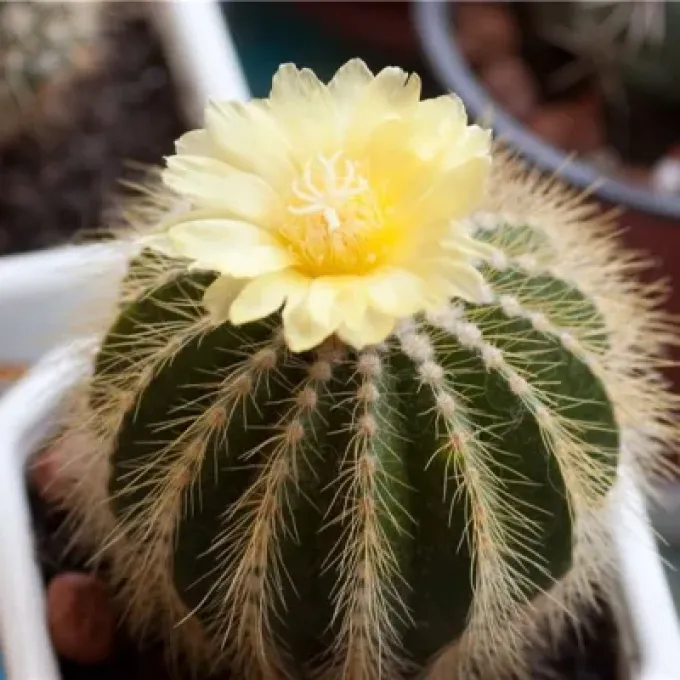
Notocactus horstii is a distinct species within the Cactaceae family, native to the Rio Grande do Sul region in Brazil. This ornamental crop is highly valued for its spherical morphology and vibrant yellow flowers that bloom periodically.
The plant requires a well-draining, mineral-based substrate to mimic its natural rocky habitat. High levels of perlite, pumice, or coarse sand are recommended to prevent moisture retention around the root system.
Optimal growth occurs under bright, filtered sunlight. While mature plants are relatively resilient, protection from the most intense noon sun is necessary in greenhouse environments to prevent skin scarring and physiological stress.
Climate requirements involve distinct cycles of active growth and winter dormancy. During the growing season, consistent warmth is needed, whereas winter temperatures should be maintained between 10 and 12 degrees Celsius to ensure healthy blooming in the following year.
Proper water management is essential for this culture. Irrigation should be applied thoroughly but only after the substrate has completely dried out, reducing risks of root rot during cooler periods of the year.
Main diseases and pests
Spider mites are the most prevalent pest affecting Notocactus horstii, particularly in controlled environments with low humidity. These pests thrive in dry conditions, puncturing the epidermis to extract plant sap.
Root mealybugs pose a significant challenge, as they often go unnoticed until the plant shows signs of decline. Routine inspections of the root ball are critical for early detection and mitigation.
Fungal pathogens, such as Pythium and Fusarium, are the primary biological threats when overwatering occurs. These fungi attack the roots and vascular system, leading to rapid tissue death and plant collapse.
Preventative strategies include maintaining adequate airflow and utilizing sterile, well-draining potting media. Ensuring the plant is not kept in standing water is the most effective way to avoid these pathogens.
Management of pest outbreaks requires the application of targeted acaricides or systemic insecticides. It is vital to rotate treatments to prevent the development of pesticide resistance in mite populations.