
Myrtillocactus cochal
Myrtillocactus cochal
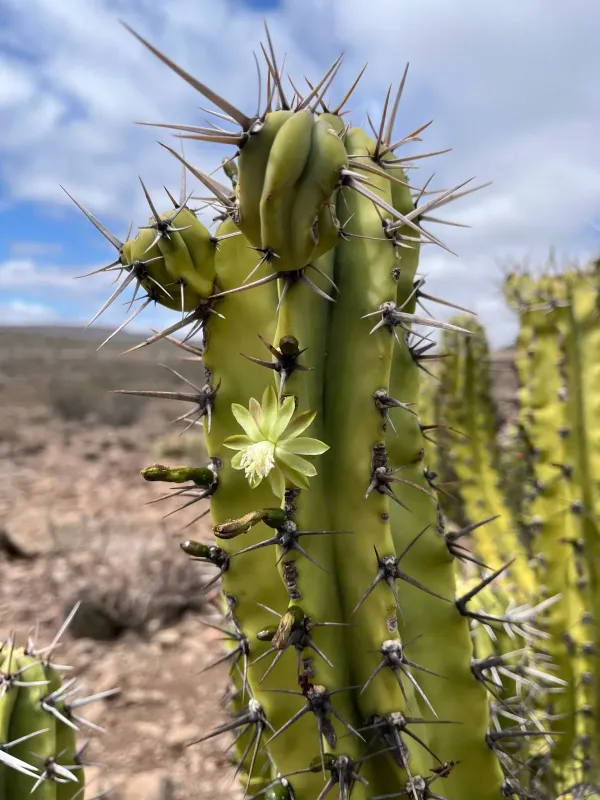
Description
Growing requirements
Myrtillocactus cochal is a tree-like succulent belonging to the Cactaceae family, endemic to the arid regions of Baja California. The plant forms a robust trunk with numerous vertical branches resembling a candelabra, reaching heights of up to 4 meters in its natural habitat.
The crop prefers well-drained, rocky, or sandy soils with low organic content. In terms of agronomy, it is critical to ensure excellent root system aeration, as moisture stagnation invariably leads to the development of root rot.
The plant is highly light-loving and drought-resistant, characteristic of arid zone flora. It is adapted to direct sunlight and requires minimal watering, especially during the dormant period when ambient temperatures drop.
In greenhouse or indoor conditions, it is important to maintain temperatures between 20-30 degrees Celsius during the growing season. In winter, a slight drop in temperature is acceptable, but substrate freezing must be strictly avoided.
Myrtillocactus cochal does not tolerate high air humidity, which is a decisive factor when choosing a planting site. Placement in open, well-ventilated areas or greenhouses with active ventilation systems is highly recommended.
Yield
The economic value of this cactus lies in its ability to produce edible fruits known as "cochal". The berries are spherical, have a deep red or purple color, and possess a pleasant, sweet-tart flavor.
Fruiting occurs in mature specimens that have reached a specific weight and stem diameter. Yields on an industrial scale are not particularly high, but in its native range, the fruit is actively harvested by local populations for fresh consumption or processing.
The fruit is rich in sugars and micronutrients common to succulent species. The agricultural potential of the crop is considered promising for arid regions facing water shortages that limit traditional agricultural practices.
Beyond the fruit, the stems of the plant are used in ornamental horticulture as valuable architectural elements in landscape design. Its resistance to extreme heat makes it an essential component for xeriscaping projects.
Future breeding prospects are aimed at increasing fruit size and enhancing fruiting intensity. Currently, the majority of the harvest is collected from wild populations found in its natural habitat.
Main diseases and pests
The primary threats include fungal infections caused by over-watering of the soil or excessive air humidity. Affected areas appear as dark, soft spots that spread rapidly through the stem tissues.
Among pests, mealybugs and spider mites pose the greatest danger to young specimens. They suck sap from the young shoots, weakening the plant's immunity and stunting its growth.
Root mealybugs are hidden pests that damage the subterranean parts of the plant. Their presence is often detected too late when the upper parts begin to lose turgor, making preventive soil treatment with insecticides mandatory.
Incorrect lighting, specifically a lack of direct sunlight, leads to etiolation—unhealthy stem elongation. This makes the plant fragile and susceptible to mechanical damage.
To control pests and diseases, it is recommended to apply systemic fungicides and insecticides in low concentrations. An important agronomic practice is the regular cleaning of the epidermis to ensure proper gas exchange.