
Myrtillocactus chimera
Myrtillocactus chimera
Description
Growing requirements
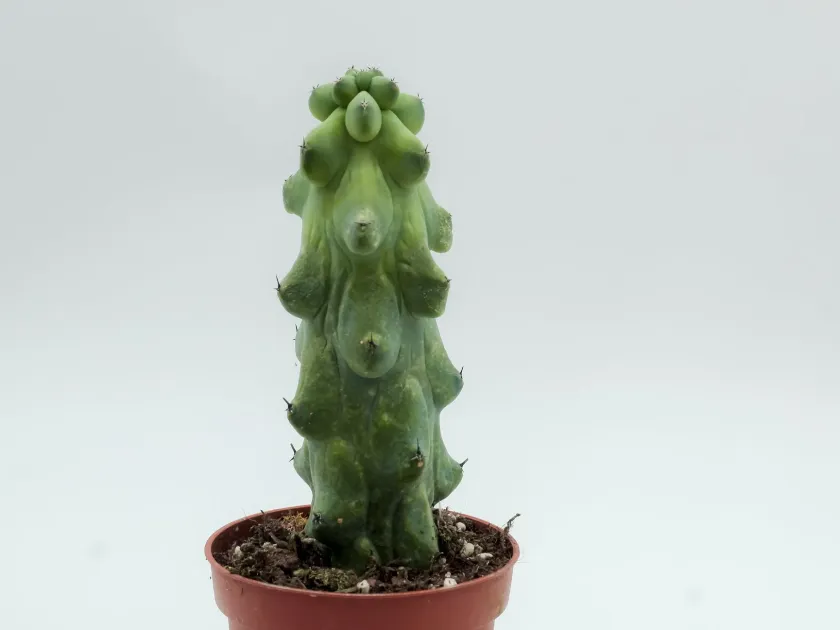
Myrtillocactus chimera is a fascinating horticultural mutation derived from Myrtillocactus geometrizans, a member of the Cactaceae family. Originating from the arid regions of Mexico, this plant is cultivated primarily for its unique morphological structure, which differs significantly from the wild type due to its crested or irregular growth patterns.
The cultivation requirements are centered around providing high light intensity and proper ventilation. In agricultural practice, maintaining a stable temperature range between 20°C and 30°C during the growing season is crucial, while providing a cool rest period at 10°C to 15°C during winter to simulate its natural environment.
Soil management is critical for this species. A well-draining, gritty substrate is required to prevent root suffocation. Ideal soil mixtures typically consist of inorganic components such as pumice, coarse sand, and volcanic rock, ensuring that moisture does not remain stagnant within the root zone for extended periods.
Watering protocols must be strictly managed, following the 'soak and dry' method. During the active growth stage, the substrate should be allowed to dry completely before the next irrigation. During the winter dormancy, water supply should be restricted to prevent physiological stress and potential root rot.
This crop is highly valued in the nursery industry for its aesthetic appeal and scientific interest. Due to its mutation, propagation is almost exclusively conducted via grafting onto healthy, vigorous rootstocks, which provides the necessary nutritional support for the slow-growing scion to thrive.
Main diseases and pests
The primary threats to this crop include fungal infections resulting from overwatering and poor drainage, such as rot of the basal stem and roots. Implementing strict hygiene practices, such as sterilizing tools and pots, is essential to minimize the risk of pathogen transmission in professional greenhouse environments.
Pest management focuses on monitoring for common succulent pests including mealybugs, scale insects, and spider mites. These organisms can quickly infest the complex folds of the chimera growth pattern, necessitating the use of targeted systemic insecticides to ensure plant health and structural integrity.