
Mitrocereus fulviceps
Mitrocereus fulviceps
Description
Growing requirements
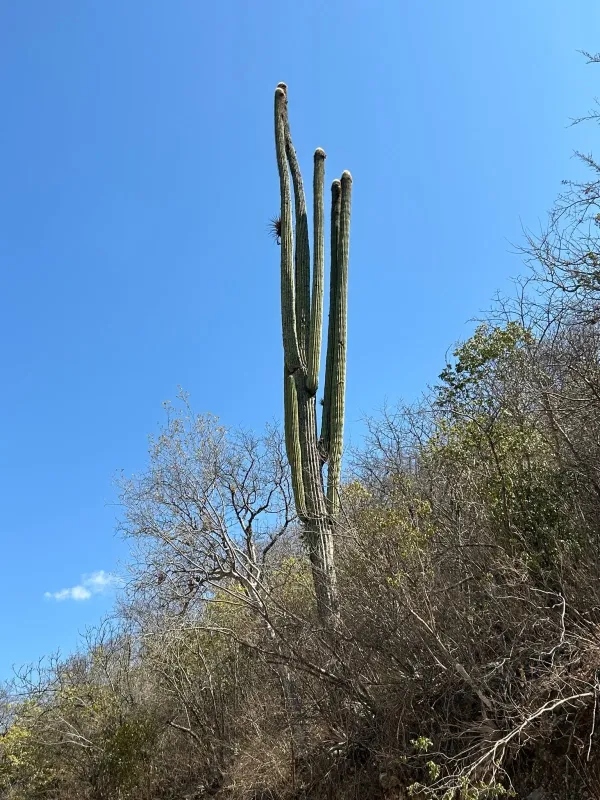
Mitrocereus fulviceps is a distinctive species within the Cactaceae family, known for its majestic, column-like structure and specialized adaptations to arid Mexican environments. This plant primarily thrives in the rocky, desert landscapes of Puebla, where it experiences significant diurnal temperature fluctuations.
Cultivation success relies heavily on replicating its native high-light exposure. This cactus requires maximum sun intensity to maintain its characteristic dense spination and structural integrity. In lower light environments, the column growth becomes etiolated, leading to irreversible aesthetic and physiological damage.
The potting medium must be highly porous and inorganic. A typical mixture consists of coarse desert sand, grit, and limestone chips, ensuring that irrigation water passes through the container almost instantly. Organic matter should be kept to an absolute minimum to prevent fungal rot.
Climate requirements involve high heat during the growing season, with daytime temperatures ideally ranging between 25°C and 35°C. During winter dormancy, the plant must be kept completely dry in a cool environment, ideally between 10°C and 12°C, to trigger its natural metabolic slowdown.
Watering practices are the most critical aspect of maintenance. During the active growth phase, the substrate must dry out completely between waterings. Any accumulation of moisture around the root collar can lead to immediate tissue collapse and death of the specimen.
Main diseases and pests
Root rot, driven by stagnant moisture, is the primary threat to Mitrocereus fulviceps. This condition is often silent until the base of the cactus begins to soften or discolor, at which point the internal vascular system may already be extensively compromised.
Pests such as mealybugs represent a persistent challenge, especially within the dense woolly hairs of the areoles where they find shelter. Systematic application of targeted insecticides is necessary to manage these colonies before they can damage the plant's surface.
Spider mites can be particularly destructive during hot, arid periods, feeding on the epidermis and causing unsightly scabbing. Frequent inspections are required, and the use of appropriate miticides is recommended as soon as any webbing or chlorotic spots appear.
Poor ventilation within enclosed greenhouse environments often leads to fungal outbreaks, particularly on the softer, younger tissues at the apex. Increasing airflow using ventilation fans is a crucial prophylactic measure for maintaining overall plant vigor.
Mechanical damage to the spines or epidermis provides an entry point for opportunistic pathogens. Proper handling using thick gloves or specialized clamping tools is essential to preserve the protective outer layer of the plant throughout its lifecycle.