
Lobivia arachnacantha
Lobivia arachnacantha
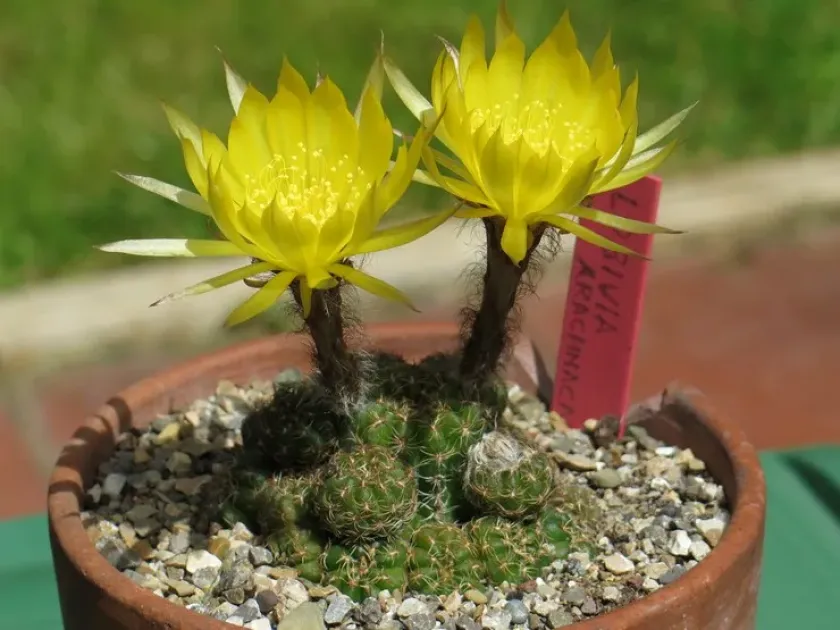
Description
Sowing dates
Propagation of Lobivia arachnacantha is most commonly carried out by seeds, as this species forms numerous offsets only at a mature age. The optimal time for sowing is spring, when daylight hours begin to increase actively.
Seeds are sown in a sterile substrate consisting of a mixture of sand and peat. It is important to maintain constant humidity and a temperature in the range of 22–25 degrees Celsius until the first sprouts appear.
Sowing containers must have drainage holes to avoid water stagnation. Initially, seedlings require shading from direct sunlight to prevent burns to the tender young tissues.
Pricking out of the grown cacti is performed when they reach the size of a pea. At this stage, the plant already has the rudiments of its own root system, capable of transplantation into individual pots.
To accelerate growth, Lobivia seedlings can be kept in greenhouse conditions with increased air humidity during the first months of life.
Growing requirements
Lobivia arachnacantha belongs to the Cactaceae family and originates from the high-altitude regions of Bolivia. In its natural environment, it is adapted to sharp diurnal temperature fluctuations and intense sunlight.
For successful cultivation, the plant requires the brightest possible lighting. If light is insufficient, the cactus stretches, loses its characteristic flattened shape, and stops flowering.
The soil mixture must be extremely permeable and poor in organic matter. An ideal substrate is one intended for cacti, supplemented with brick chips, gravel, or coarse-grained sand.
Watering should be moderate during the active growing season, with the soil ball allowed to dry out completely between waterings. During the winter dormancy period, watering is virtually stopped while keeping the plant in a cool environment.
The summer temperature regime should correspond to normal indoor values, but in winter, Lobivia requires a "cold dormancy" at temperatures between 5 and 10 degrees to initiate flower bud formation.
Main diseases and pests
The main pests for Lobivia arachnacantha are the spider mite and mealybug. They multiply rapidly in the dry air of indoor environments, sucking sap from the tender tissues of the cactus.
Root rot poses the greatest danger to this species when watering agrotechnics are violated. Excessive humidity combined with cold temperatures triggers the development of fungal diseases.
When affected by fungi, the plant may become soft at the base, which often indicates irreversible rot processes of the roots and stem.
To prevent pests, regular inspection of the cactus epidermis is recommended, especially during the summer period. If insects are found, specialized insecticides or acaricides should be applied.
Ensuring good ventilation in the growing area significantly reduces the risk of infectious diseases and rot.