
Hamatocactus hamatacanthus
Hamatocactus hamatacanthus
Description
Growing requirements
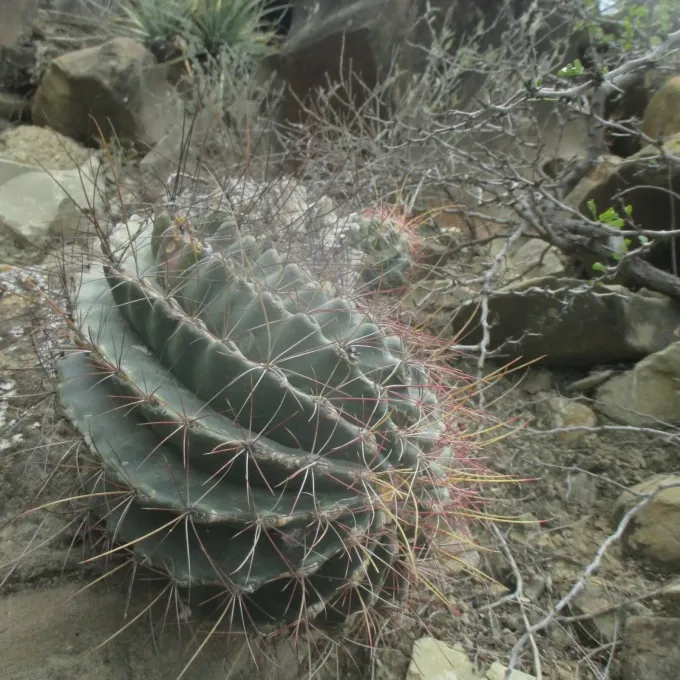
Hamatocactus hamatacanthus is a prominent species within the Cactaceae family, native to the arid landscapes of the southwestern United States and northern Mexico. This plant is highly valued for its striking morphology, characterized by a globose stem and long, recurved spines that serve as a natural defense mechanism.
Botanically, the species is recognized by its distinct, prominent ribs and its capacity to produce large, funnel-shaped flowers, which are typically yellow or orange. These blooms generally appear in the late summer, requiring sufficient energy reserves built up during the growing season.
Successful cultivation necessitates a position in full sun exposure. In indoor settings, high-intensity artificial lighting or a south-facing window is essential to maintain the structural integrity and prevent etiolation. The plant requires excellent ventilation to mimic its natural desert habitat.
The substrate must be highly porous and inorganic. A professional mix should consist of mineral components such as volcanic rock, coarse sand, and perlite, avoiding high concentrations of peat moss. Drainage holes in the container are non-negotiable to prevent moisture buildup.
Watering requirements follow the seasonal cycle. During the active growth period, the plant requires regular, thorough watering once the soil has completely dried. However, during the winter dormant phase, the plant must be kept almost completely dry and in a cool environment to initiate flowering.
Main diseases and pests
The primary pests affecting this species are spider mites and mealybugs. These organisms often hide within the dense spine network, making early detection vital. Using systemic insecticides or targeted biological controls is recommended for management in a controlled environment.
Root rot caused by fungal pathogens is the most common physiological challenge, usually resulting from overwatering. To minimize this risk, ensure the soil mix allows for rapid drying and strictly avoid cold temperatures while the substrate is damp.