
Echinofossulocactus vaupelianus
Echinofossulocactus vaupelianus
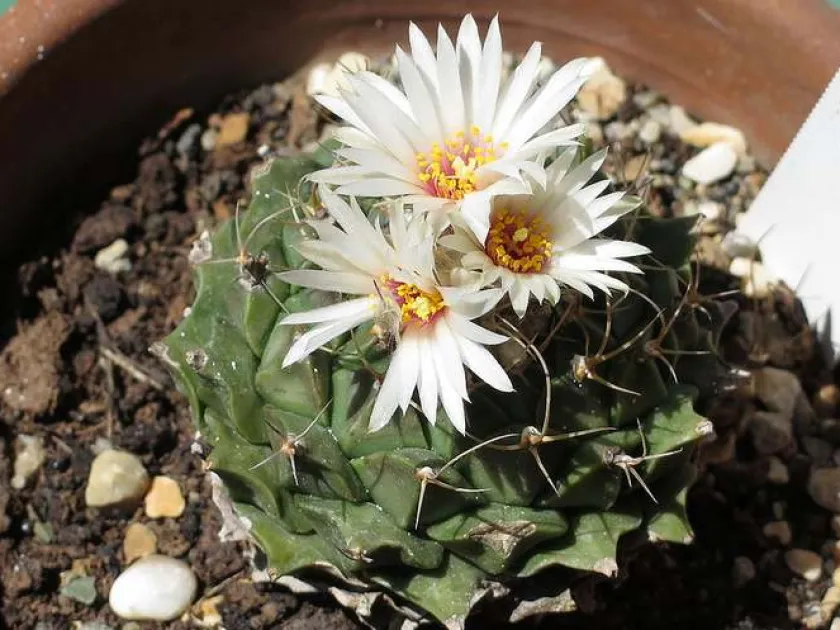
Description
Sowing dates
Sowing seeds of Echinofossulocactus vaupelianus should ideally occur in early spring to coincide with increasing daylight hours. This timing provides the essential light levels required for healthy germination and early growth of the seedlings.
The substrate for sowing must be light, porous, and well-draining. A mix consisting of sterile sand, fine grit, and a small amount of peat or leaf mold is recommended to ensure the roots have oxygen while maintaining necessary moisture.
Seeds are placed on the surface of the moistened soil without burying them. Covering the container with a clear lid or plastic wrap creates a humid micro-environment, which is crucial for the delicate germination phase.
An ideal temperature range for germination is between 22 and 25 degrees Celsius. Consistent warmth combined with bright, indirect light promotes uniform growth and helps prevent the seedlings from becoming etiolated.
After about six months, when the young cacti have developed sufficient spines, they can be carefully pricked out into individual small pots. Gradual acclimatization to lower humidity is essential at this stage to prevent transplant shock.
Growing requirements
Echinofossulocactus vaupelianus is a member of the Cactaceae family, native to the arid regions of Mexico. It is characterized by its globular, ribbed stem, which often features deep undulations that serve as a hallmark of the species.
The plant requires extremely high levels of sunlight to maintain its compact shape and promote flowering. In cultivation, it thrives best in south-facing windows or greenhouses where intense, unobstructed light is guaranteed throughout the year.
A well-draining mineral-based potting mix is mandatory. The pot must have ample drainage holes, and a base layer of coarse gravel or pumice should be added to ensure that excess water flows away quickly after irrigation.
Watering practices are seasonal: in summer, water only after the substrate has dried out completely; in winter, reduce watering to an absolute minimum to support the plant's natural dormancy period at cooler temperatures.
The species is primarily utilized for ornamental purposes. It is a prized specimen for specialized cactus collections and is frequently used in xeriscaping or decorative displays that replicate arid, natural habitats.
Main diseases and pests
The primary threat to the health of Echinofossulocactus vaupelianus is overwatering, which quickly leads to root rot and base decay. Stagnant moisture in the soil is usually fatal to the plant, especially during cooler months.
Pests, particularly spider mites and mealybugs, are frequent offenders. These pests thrive in dry environments and often shelter within the deep ribs of the cactus, making them difficult to detect and eradicate without close inspection.
Proactive management includes regular monitoring and improving air circulation around the plants. If an infestation occurs, specialized systemic insecticides or horticultural soaps can be applied directly to the affected areas.
Infection by fungal pathogens often occurs through small wounds or cracks on the stem surface. Ensuring that tools are sanitized during maintenance tasks and avoiding mechanical damage are key to preventing these types of infections.
For long-term health, apply fertilizers specifically formulated for cacti sparingly. High nitrogen levels should be avoided, as they produce soft, succulent growth that is more susceptible to disease and pest attacks.