
Echinofossulocactus ochoterenaus
Echinofossulocactus ochoterenaus
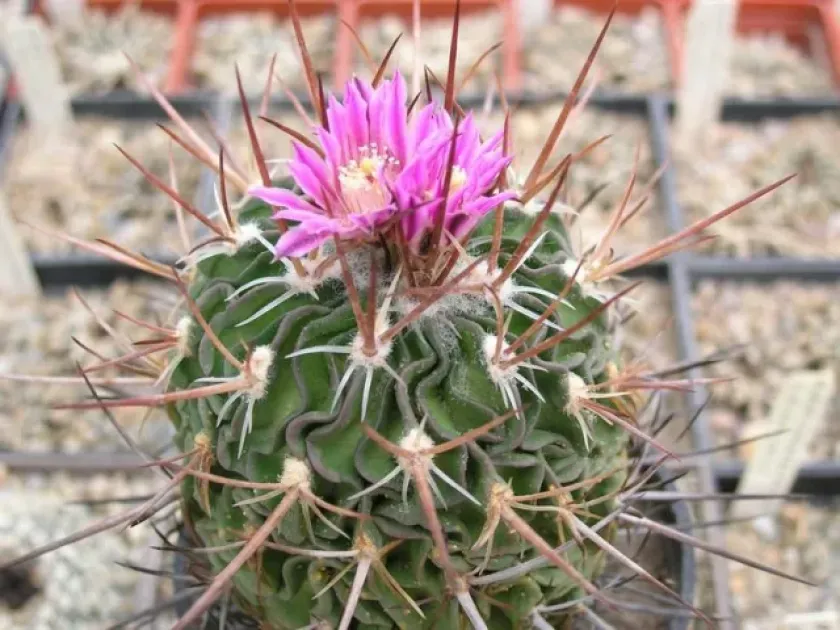
Description
Sowing dates
The propagation of Echinofossulocactus ochoterenaus is primarily achieved through seeds. Sowing should ideally occur in early spring to leverage the natural increase in day length and warmth.
Seeds are placed on a fine, well-draining substrate comprised of peat and coarse sand. Keeping the medium consistently moist but not saturated is crucial during the germination phase.
A temperature range of 22 to 26 degrees Celsius is optimal for success. Using small greenhouses or clear plastic covers helps maintain the required microclimate for the developing seedlings.
Gradual ventilation of the seed trays is necessary as the sprouts grow. This helps strengthen the young cacti and prevents the buildup of excess humidity that leads to damping-off disease.
Seedlings should be transplanted into individual small pots only when they have developed sufficient physical robustness, typically after the first season of growth.
Growing requirements
Echinofossulocactus ochoterenaus belongs to the Cactaceae family and is native to the arid environments of central Mexico. It thrives in conditions that mimic high-altitude desert plateaus.
The soil must be highly porous, containing mineral components like pumice or lava rock. Organic matter should be minimized to prevent root respiration issues and rot.
Proper light exposure is essential for this species to develop its characteristic intricate ribbing. Full sunlight or very bright filtered light is required throughout the growing season.
Watering practices must include a strict dry-out period. During the winter, the plant enters dormancy, and watering should be almost completely suspended to allow for proper physiological rest.
Good air circulation is vital to prevent fungal issues. Placing the plant in an area with fresh airflow significantly reduces the risk of skin lesions and pathogen accumulation.
Main diseases and pests
Mealybugs and spider mites are the most common pests affecting this species. They typically hide in the deep grooves between the ribs, making them difficult to detect early.
Fungal rot is the primary disease risk, often triggered by overwatering or poor soil drainage. If the base of the plant becomes soft or discolored, immediate action is required.
Sunburn can occur if the cactus is moved from low-light to high-light conditions too quickly. Gradual acclimation is necessary to prevent permanent scarring of the epidermis.
Root rot is often caused by lack of oxygen in the substrate. Using pots with large drainage holes is a fundamental agricultural practice for maintaining root health in these plants.
Consistent monitoring and the use of targeted pesticides are recommended for large collections. Keeping the growing area clean and free of dead plant matter helps prevent recurring infections.