
Echinofossulocactus crispatus
Echinofossulocactus crispatus
Description
Sowing dates
Echinofossulocactus crispatus is primarily propagated via seeds. The sowing process should be initiated in early spring to leverage the increasing day length, which is crucial for optimal germination rates and seedling vigor.
A well-draining, sterile substrate is essential for seed starting. A mixture comprising equal parts of fine pumice, sand, and sterile peat works best to provide the necessary support while preventing fungal growth.
Seeds are sown on the surface and lightly pressed into the medium without being buried deep. The container must be covered to maintain high relative humidity and a constant temperature between 22 and 25 degrees Celsius.
Once germination occurs, which may take up to three weeks, gradual ventilation is introduced to harden the seedlings. It is vital to avoid sudden exposure to direct sunlight at this vulnerable stage to prevent scorching.
The first transplanting into individual small pots should be performed only after the young plants have developed a sufficient root system and initial spines, typically one year after sowing.
Growing requirements
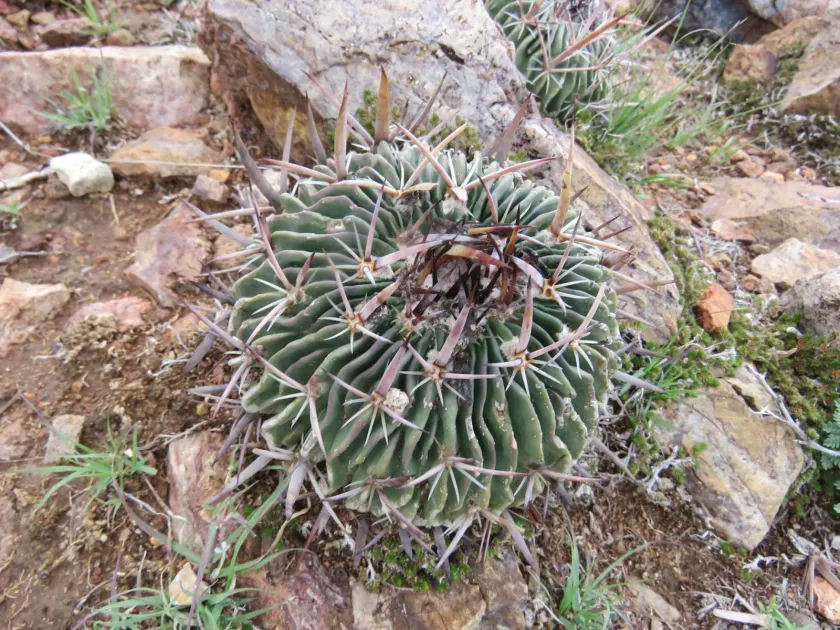
Belonging to the Cactaceae family, this species is renowned for its highly compressed and wavy ribs, which provide a unique architectural aesthetic. It is native to the arid highlands of Mexico.
The plant demands high levels of solar radiation during the growing season. In indoor conditions, it should be placed in the brightest window available or under professional grow lights to maintain its compact habit.
The soil profile must be inorganic-heavy to mimic the natural rocky environment. A standard mix includes coarse sand, gravel, and minimal organic content, ensuring rapid water drainage after irrigation.
Watering protocols must follow a dry-wet cycle. During the active growth period from late spring to summer, water thoroughly only when the potting mix has dried out completely. Overwatering remains the most significant risk factor.
A mandatory winter dormancy period is required to stimulate healthy growth in the following season. During this time, temperatures should be kept cool (around 10-12 degrees Celsius) and water withheld almost entirely.
Main diseases and pests
Red spider mites are the most frequent pests, particularly in dry and poorly ventilated indoor environments. These pests feed on the succulent tissues, leaving characteristic rusty-colored scarring on the stem.
Root mealybugs can infest the subterranean parts of the cactus, causing the plant to stop growing or eventually collapse. Inspection of the root ball during repotting is essential for early detection.
Fungal infections, such as stem rot, are almost always linked to poor drainage or overly humid conditions during winter. Symptoms include soft, discolored areas that spread rapidly if not treated.
- Use of systemic insecticides for pest control.
- Proper airflow to mitigate humidity.
- Immediate excision of rotted tissues followed by dusting with sulfur.
To prevent these threats, maintain a clean growing environment and avoid wetting the plant body during the winter months. Consistent monitoring allows for prompt intervention before damage becomes irreversible.