
Aylostera deminuta
Aylostera deminuta
Description
Growing requirements
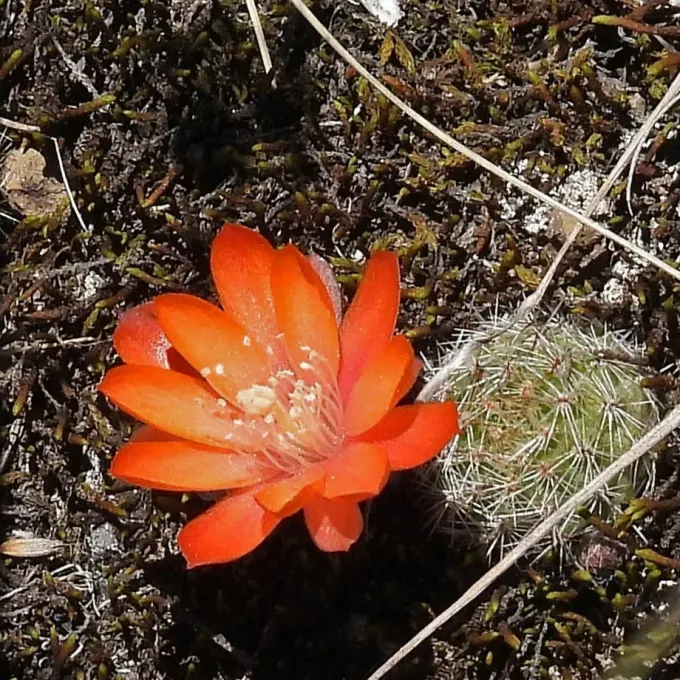
Aylostera deminuta is a small, globose succulent belonging to the Cactaceae family, native to the high-altitude regions of Argentina. This plant is well-regarded by collectors for its brilliant, vivid flowers and its ability to thrive in harsh, rocky environments.
Botanically, the plant develops a spherical stem that eventually grows into short columns, densely covered with small spines. Its architecture allows it to maximize light absorption while minimizing surface area for water loss, which is a classic adaptation to its arid habitat.
Light requirements are paramount; this cactus requires intense, direct sunlight to maintain a compact, healthy shape. Without sufficient light, the plant will become etiolated, losing its characteristic aesthetic and significantly reducing its ability to flower during the summer.
The growing medium must be highly porous and well-draining, mimicking the stony soils of its native habitat. A mixture of pumice, coarse sand, and organic compost is recommended to ensure that moisture does not accumulate around the roots for extended periods.
The climate requirements for Aylostera deminuta include a strict winter dormancy period. During the winter, the temperature should be kept cool, ideally between 8 and 12 degrees Celsius, with no water provided until growth resumes in the early spring.
Main diseases and pests
The primary threat to the health of this cactus is root rot, caused by overwatering or poor soil aeration. If the roots remain wet for too long, the plant’s tissues become susceptible to various fungal pathogens that can destroy the plant from the base upwards.
Common pests include red spider mites, which thrive in low-humidity environments and can cause significant damage to the plant's epidermis. Mealybugs may also appear, hiding between the spines and feeding on the plant's sap, which weakens its overall structure.