
Ariocarpus trigonus
Ariocarpus trigonus
Description
Sowing dates
Sowing Ariocarpus trigonus requires high precision and patience as the seeds germinate slowly and are sensitive to environmental fluctuations in the early stages.
Using a mineral-based substrate that is well-drained and sterilized is essential to prevent early seedling mortality caused by common damping-off fungi.
Maintain temperatures between 20°C and 25°C throughout the germination phase, providing consistent, filtered light to encourage healthy development.
Seedlings remain small for a prolonged period, and keeping them in a humid environment under glass or plastic is necessary for the first few months.
Gradual hardening off should be implemented only after the seedlings show signs of maturation, typically after their first or second winter in the nursery.
Growing requirements
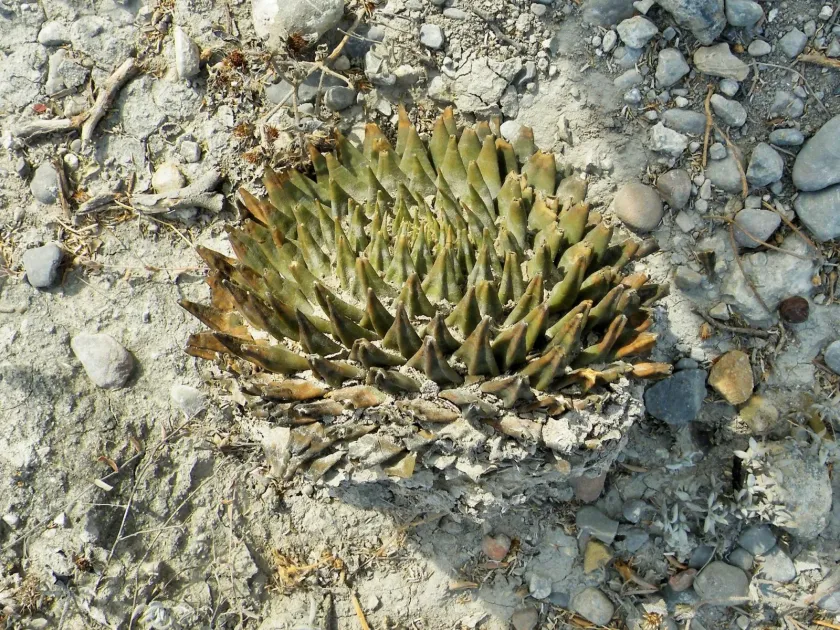
Ariocarpus trigonus is a member of the Cactaceae family, native to the limestone hills of Tamaulipas, Mexico, and is highly specialized for arid conditions.
The plant features a tuberous taproot used for moisture storage, making the species exceptionally tolerant to droughts but intolerant to waterlogged soils.
Cultivation requires a coarse, porous mix comprising gravel, crushed brick, and pumice to ensure that irrigation water passes through the pot rapidly.
Direct exposure to sunlight is crucial during the growing season to prevent etiolation and to support the growth of its characteristic triangular tubercles.
Winter dormancy must be strictly observed by keeping the plants dry and in a cool environment, with temperatures remaining above freezing point.
Main diseases and pests
The most common threat to this species is root rot, which is caused by improper watering techniques or substrate that retains too much moisture.
Mealybugs often hide in the deep crevices between the triangular tubercles, making them difficult to detect without careful inspection of the stem.
Fungal spotting can occur if the airflow around the plant is insufficient, especially in high-humidity climates or during the early spring re-watering phase.
Root-knot nematodes can weaken the plant over time, so using clean, high-quality components for your soil mix is a primary defense strategy.
Proactive management involves seasonal applications of mild systemic fungicides and insecticides to maintain the health and vigor of these slow-growing specimens.