
Ariocarpus fissuratus
Ariocarpus fissuratus
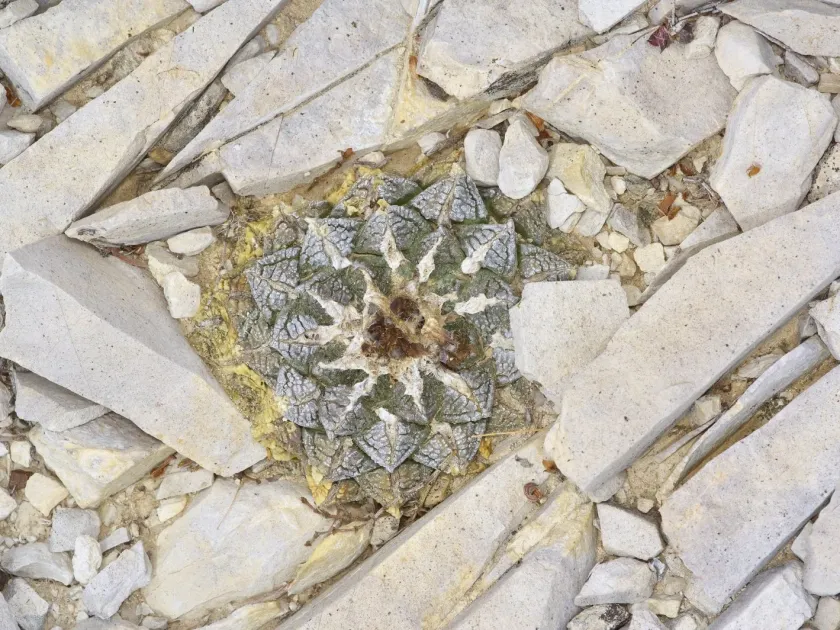
Description
Sowing dates
Growing Ariocarpus fissuratus from seeds requires patience and strict adherence to environmental conditions, with early spring being the most favorable time for sowing.
The seeds should be placed on a sterile mineral-based substrate that mimics the plant's natural habitat, emphasizing high drainage and low organic matter content.
Maintaining a stable humidity level under a transparent cover is essential during the initial phase, followed by a very gradual transition to drier air as seedlings develop.
Temperature control is vital; keeping the seedling tray between 22 and 26 degrees Celsius ensures optimal germination rates for this slow-growing species.
Transplanting seedlings to individual pots should be done only after they have reached a sufficient size to withstand the stress of root disturbance, usually after a year of growth.
Growing requirements
Ariocarpus fissuratus, a member of the Cactaceae family, is a slow-growing succulent native to the arid limestone-rich regions of Northern Mexico and Texas.
Its unique morphology, including a large tuberous taproot, allows the plant to store significant water reserves, making it highly drought-tolerant in its native climate.
Cultivation requires a mineral-heavy potting mix, often incorporating crushed limestone or volcanic grit to replicate the alkaline soil conditions it thrives in.
Sunlight requirements are demanding; these plants prefer intense, full-spectrum exposure to maintain their compact, flat-topped appearance and healthy epidermal structure.
A rigorous dormancy period during the winter is mandatory, where water is completely withheld and ambient temperatures are kept cool to support annual growth cycles.
Main diseases and pests
The most common cause of failure in cultivating this species is excessive irrigation, which leads to root rot that can destroy the plant's essential tuberous system.
Mealybugs are a significant pest concern, often found hidden within the complex cracks of the stem where they are difficult to reach with standard surface treatments.
Spider mites can cause scarring on the epidermis of the plant, which is irreversible and diminishes the aesthetic value of these highly prized, slow-growing specimens.
Fungal infections can be minimized by ensuring excellent air circulation around the plants and avoiding water accumulation on the plant body during the growing season.
Using systemic insecticides or fungicides as a preventive measure should be conducted carefully, following professional guidelines to avoid chemical burn on the sensitive tissue.