
Puya weberiana
Puya weberiana
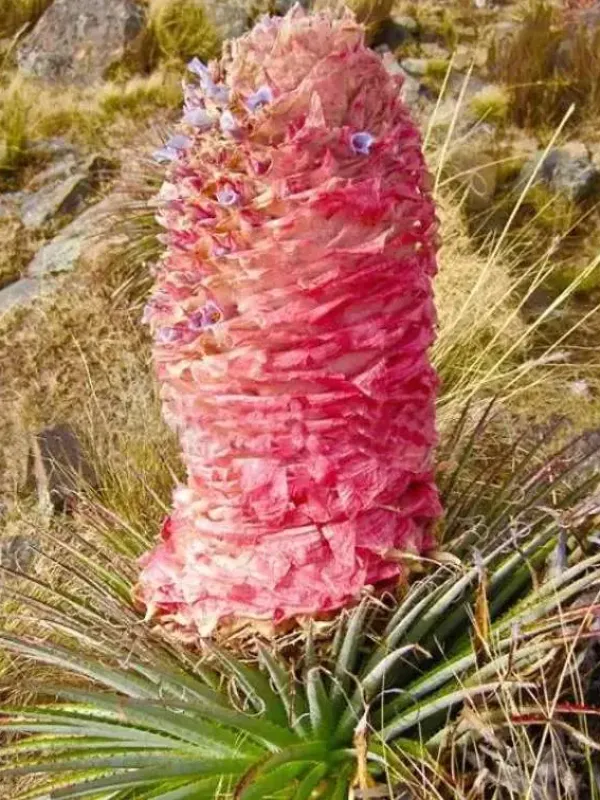
Description
Sowing dates
Propagation of Puya weberiana is primarily achieved through seeds or by separating basal offsets from the parent plant. Seeds should be sown in a well-draining, sandy substrate to ensure adequate aeration and prevent moisture retention.
The ideal time for sowing is during the spring months, as increasing day length and moderate temperatures significantly boost germination rates. Maintaining a consistent temperature between 22 and 25 degrees Celsius is crucial for early development.
Seeds require light for germination, so they should be surface-sown and only lightly pressed into the medium. Keeping the containers covered with a transparent film helps maintain the necessary humidity levels during the initial growth phase.
Germination is often slow and requires patience, as the process depends heavily on seed freshness and stable environmental conditions. Once the seedlings develop several true leaves, they can be transplanted into individual pots.
Vegetative propagation using offsets is a more efficient method for cloning mature plants, though it depends on the number of offshoots produced by the parent rosette.
Growing requirements
Puya weberiana is a member of the Bromeliaceae family and is native to the high-altitude regions of South America. It is a highly drought-tolerant perennial that thrives in harsh, rocky environments with intense sunlight exposure.
The plant requires a fast-draining, mineral-based soil mix with low organic matter content. Overwatering or poor drainage will almost certainly lead to root rot, which is the most common cause of failure in cultivating this species.
In terms of light, the plant needs full sun to develop its characteristic stiff, spine-tipped foliage and strong structure. It is well-adapted to wide temperature fluctuations typical of its natural mountainous habitat.
Botanically, it forms a dense rosette of narrow, serrated leaves, creating a protective mechanism against herbivores. The plant eventually produces a large, impressive inflorescence that can reach significant heights.
This culture is primarily utilized in ornamental horticulture, specifically for dry-garden landscapes, xeric plant collections, and botanical garden exhibitions, where its unique architectural form is highly valued.
Main diseases and pests
The most significant threat to Puya weberiana is root rot and crown rot, primarily induced by waterlogging. Ensuring the substrate dries out completely between waterings is the most effective preventative measure against fungal issues.
Mealybugs and scale insects are the most frequent pests, often congregating in the tight spaces of the leaf axils. Regular inspection and targeted application of horticultural oils or systemic insecticides are recommended to control infestations.
Spider mites can become problematic in indoor or greenhouse settings where the air is excessively dry. Maintaining adequate air circulation and moderate humidity can help deter these pests from establishing populations.
Low light conditions cause the leaves to stretch and become brittle, significantly weakening the plant's structural integrity. A weakened plant is inherently more susceptible to secondary infections and physiological disorders.
Maintaining a clean growing environment and avoiding high-density planting help minimize the risk of spreading pathogens. Proper sanitation of tools and pots is also essential when working with these sensitive succulent species.