
Puya venusta
Puya venusta
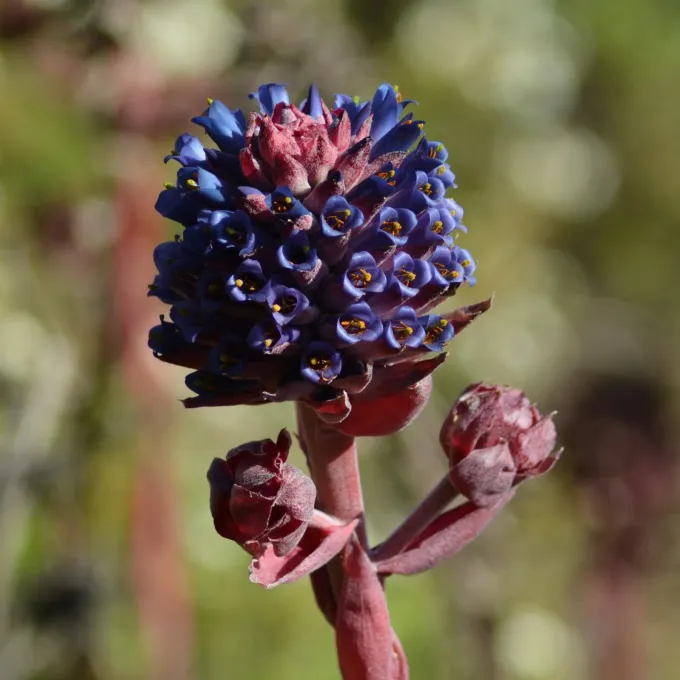
Description
Growing requirements
Puya venusta is a species of flowering plant in the Bromeliaceae family, native to the arid coastal ranges of Chile. It is a highly specialized xerophyte that thrives in rocky and nutrient-poor environments.
The plant features a tight, basal rosette of rigid, silver-coated leaves armed with sharp marginal spines. This structure allows the plant to minimize water loss through transpiration in its harsh natural habitat.
For successful cultivation, the plant requires a sandy, well-draining soil mix similar to those used for cacti and succulents. It is imperative to avoid waterlogged conditions, which will quickly lead to root rot.
This species demands full sun exposure to maintain its compact growth habit and silver leaf coloration. In non-native climates, it must be grown in containers that can be moved indoors during frost periods.
Agricultural management focuses on minimal irrigation. Watering should be deep but infrequent, allowing the substrate to dry out completely between applications to mimic the plant's natural rainfall cycle.
Main diseases and pests
The primary threat to Puya venusta in cultivation is the development of fungal rot. This is almost exclusively caused by over-watering or poor air circulation within the plant's leaf rosettes.
Pests such as mealybugs and spider mites are frequent adversaries in greenhouse environments. These insects tend to hide deep within the leaf axils, making them difficult to detect and eradicate.
Root system decline is another common issue resulting from heavy, non-porous soil media. The use of inorganic components like perlite or grit is essential to ensure aeration and water movement.
Regular inspection is the best defense. Gardeners should monitor the plant for any signs of leaf yellowing or soft spots at the base, which often indicate early-stage stress or infection.
Chemical control should be applied sparingly, using systemic products that do not damage the plant's delicate foliar cuticle or its natural metallic-looking coating.