
Puya mirabilis
Puya mirabilis
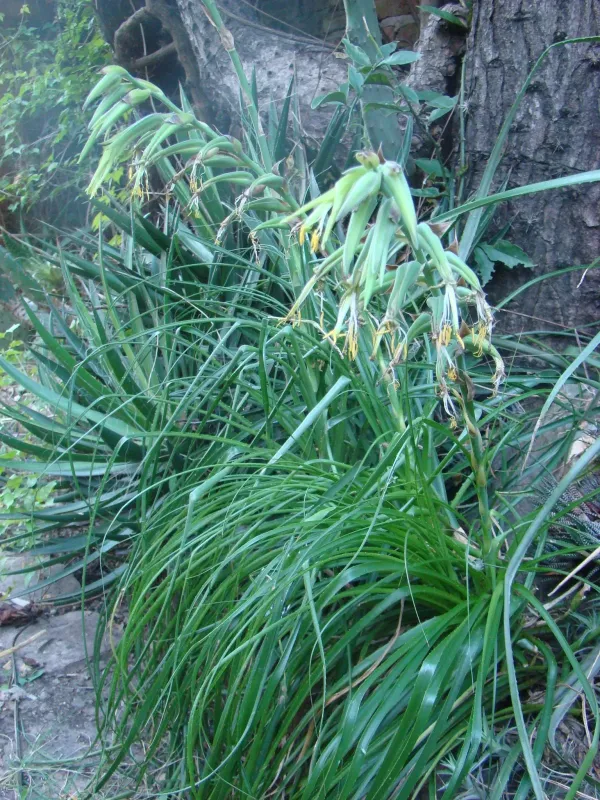
Description
Growing requirements
Puya mirabilis is a remarkable perennial plant belonging to the Bromeliaceae family. It is native to the mountainous regions of Argentina and Bolivia, where it thrives in rocky, well-drained environments, demonstrating a unique ability to adapt to arid, high-altitude climates.
Botanically, this species is defined by its dense rosette of stiff, spiny leaves that provide structural interest throughout the year. Its most striking feature is its tall, elegant inflorescence, which produces pale greenish-white flowers that are highly attractive to pollinators in its natural habitat.
To cultivate Puya mirabilis successfully, one must provide intense, direct sunlight, which is essential for healthy development and flowering. In temperate regions, it is best kept as a container plant that can be sheltered indoors during the freezing winter months to prevent damage.
The substrate must be extremely porous and gritty, mimicking the rocky crevices where the plant naturally grows. A mixture of gravel, perlite, and a small amount of sandy soil is ideal, as it prevents root rot and ensures the plant is never sitting in water-logged conditions.
Agricultural management for this species is relatively low-maintenance due to its drought-tolerant nature. Irrigation should be sparse, allowing the soil to dry out completely between waterings, as the plant is specifically adapted to long periods without precipitation.
Main diseases and pests
The most common pests affecting this plant are mealybugs and spider mites, which can thrive if air circulation is inadequate. Root rot caused by overwatering or poor drainage remains the primary threat, often leading to the rapid decay of the basal rosette and eventual plant loss.