
Puya chilensis
Puya chilensis
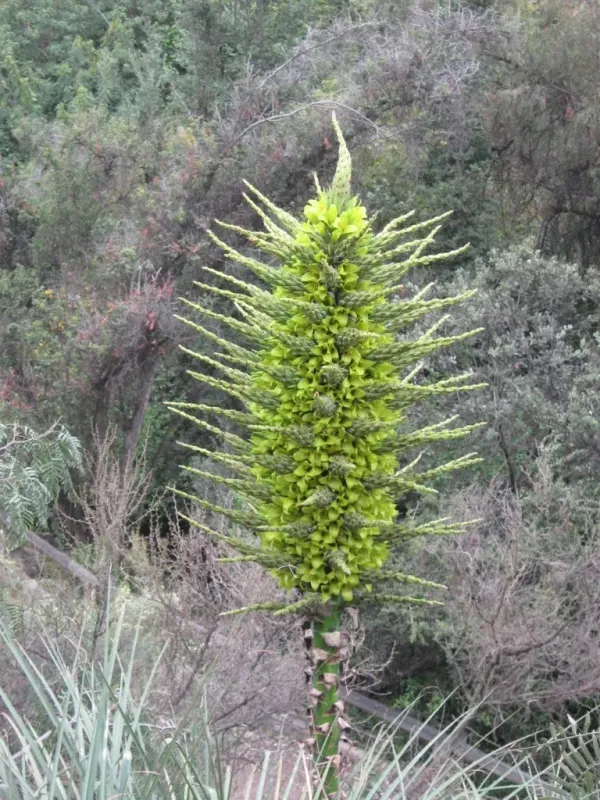
Description
Sowing dates
Propagating Puya chilensis from seeds requires patience as the process is slow, but it remains the most common way to grow this unique bromeliad. Early spring is the ideal time to start, providing the best light conditions for germination.
Use a well-draining, sandy-based substrate mixed with perlite or charcoal to prevent the accumulation of moisture around the emerging roots. Seeds should be sown on the surface and pressed lightly, not buried deep.
Temperature control is crucial during the initial stages; maintain a steady warmth between 20 and 25 degrees Celsius. High humidity is helpful at the beginning, but must be phased out quickly to avoid fungal issues.
Once the seedlings develop their first set of stiff leaves, they should be transplanted into individual pots. Handling young plants requires protection, as the serrated edges of the leaves are already quite sharp.
Vegetative propagation via offsets is a faster method for experienced gardeners. When mature plants produce side shoots, these can be carefully separated and rooted in a lean, fast-draining potting mix.
Growing requirements
As a member of the Bromeliaceae family, Puya chilensis is native to the dry, rocky slopes of Chile. It has adapted to thrive in harsh environments, making it a perfect candidate for xeriscaping in suitable climates.
Sunlight is the most critical factor for this species. To achieve optimal growth and induce flowering, the plant needs maximum direct solar radiation. It will not thrive in shaded locations and will quickly become etiolated.
The soil must be exceptionally porous. A mix specifically designed for cacti and succulents, containing large amounts of mineral grit, is necessary to ensure that roots are never left in waterlogged conditions.
Regarding temperature, this species is surprisingly resilient to light frosts but prefers consistent warmth during the growing season. Protecting the core of the rosette from freezing moisture is essential to prevent decay.
Watering should be very conservative. The plant prefers deep but infrequent watering, allowing the entire root system to dry out thoroughly before the next application. Always avoid water pooling in the leaf bases.
Yield
While not a traditional agricultural crop, Puya chilensis has historical uses in its native range. The flower stalks and buds are edible and considered a delicacy in certain Chilean communities when prepared correctly.
Beyond its culinary potential, the plant is primarily harvested for its fibers. The long, tough leaves contain high-strength fibers that have been traditionally utilized for making durable ropes and fishing nets.
In modern horticulture, the yield is measured in the production of mature, ornamental specimens. These are highly valued by collectors and public gardens due to their architectural form and rare, metallic-colored flowers.
The maturation period is extensive, often taking over a decade to reach flowering size. Consequently, the commercial value of a blooming specimen is significantly higher than that of younger, non-flowering plants.
Efficient management of these plants involves focusing on the long-term structural health of the rosette, as the primary ornamental value relies on the plant maintaining a symmetrical and robust growth form over years.
Main diseases and pests
The most significant threat to Puya chilensis is rot, specifically root and crown rot, which almost always stems from excessive moisture combined with poor drainage or stagnant air.
Pests such as mealybugs and spider mites are frequent nuisances in greenhouse settings. They exploit the sheltered spaces between the dense, spiky leaves, making them difficult to detect and eradicate.
Early intervention is vital when dealing with these pests. Systemic insecticides or acaricides are often required, followed by a adjustment of environmental parameters, specifically increasing airflow.
Preventative maintenance involves regular physical inspection of the plant's heart and the removal of any trapped organic debris that could promote fungal growth during cooler, damper periods.
- Ensure pots have adequate drainage holes and use "feet" to lift them from surfaces.
- Avoid over-fertilizing, as rapid, soft growth makes the plant more vulnerable.
- Periodically clean the plant using a gentle stream of air to remove dust.