
Puya berteroniana
Puya berteroniana
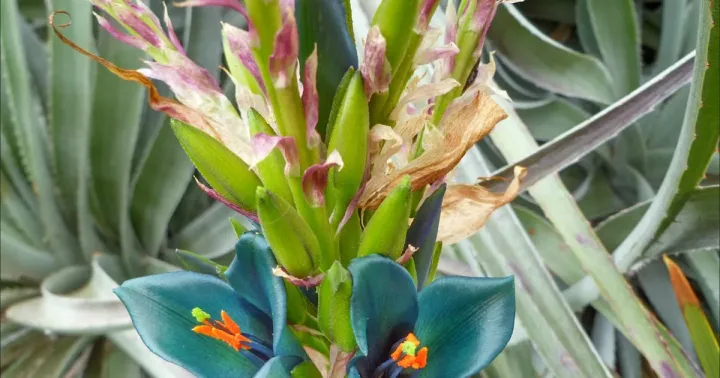
Description
Growing requirements
Puya berteroniana is a striking perennial herb belonging to the Bromeliaceae family. Native to the mountainous regions of Chile, it develops large, architectural rosettes consisting of narrow, serrated, and extremely sharp-tipped leaves.
This species requires full, direct sun exposure to flourish and initiate its impressive metallic-blue flower spikes. Inadequate light levels will hinder the plant's structural integrity and prevent its spectacular blooming cycle.
Soil requirements are relatively modest, provided that the growing medium is exceptionally well-draining. It thrives in gritty, sandy, or rocky soils that mimic the arid slopes of its natural habitat, as stagnant moisture is detrimental.
The plant is highly drought-tolerant and adapted to climates with dry summers and cool, moderately moist winters. While it can withstand light frost, prolonged exposure to freezing temperatures may necessitate protection for healthy growth.
In landscaping, Puya berteroniana is utilized as a focal point in xeriscaping or rock gardens. Its distinct appearance and metallic-colored blossoms make it a highly sought-after specimen for dry-climate garden designs.
Main diseases and pests
The primary agricultural threat to this species is root rot, which typically develops due to poor soil drainage or excessive irrigation during the dormant season.
Pest pressure is commonly characterized by infestations of mealybugs and spider mites, which find refuge within the dense, serrated leaf bases.
Cultural control involves maintaining proper spacing between specimens to ensure adequate airflow and prevent the buildup of humidity around the rosettes.
In case of severe infestation, targeted application of appropriate insecticides is recommended, while ensuring minimal damage to the plant's waxy foliage.
Regular visual monitoring of the leaf axils is crucial, as early detection of pests allows for localized treatment before the entire plant becomes compromised.