
Puya alpestris
Puya alpestris
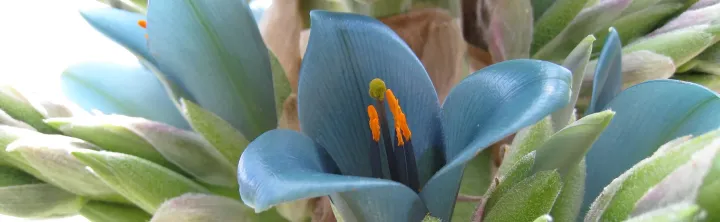
Description
Sowing dates
Seeds of Puya alpestris are sown in the spring when temperatures remain stable between 20–22 degrees Celsius. For successful germination, a light, sandy substrate mixed with vermiculite is used to provide optimal drainage.
Sowing is performed on the surface, as the seeds require exposure to sunlight for activation. Containers are covered with plastic or glass to maintain high humidity, with regular ventilation to prevent mold growth.
Seedlings may emerge unevenly over a period of 3 to 6 weeks. Once two pairs of true leaves are formed, the young plants are transplanted into individual pots, gradually acclimatizing them to drier indoor air.
Vegetative propagation involves separating daughter rosettes from the mother plant after the flowering cycle. Cut surfaces must be allowed to air-dry in the shade for several days before being planted in soil.
Young plants require careful watering during their first months to prevent crown rot, which frequently affects the root collar under conditions of excessive moisture.
Growing requirements
Puya alpestris belongs to the Bromeliad family and is a perennial xerophytic plant. Naturally occurring on the rocky slopes of Chile, it is highly adapted to intense solar radiation.
For healthy development, the plant requires bright, direct sunlight throughout the day. In temperate climates, it is typically cultivated in greenhouses or winter gardens, as it is not tolerant of severe frost.
The soil must be highly porous and breathable. An ideal mixture consists of garden soil amended with substantial amounts of coarse sand, perlite, and gravel to mimic its natural rocky habitat.
Watering should be moderate, allowing the top layer of the substrate to dry out completely before applying more moisture in the summer. During winter, watering is reduced significantly to maintain a rest period at 5–10 degrees Celsius.
While the plant tolerates low air humidity, it is sensitive to water accumulation within the leaf rosette, which can easily trigger rotting processes in the center of the stem.
Main diseases and pests
Root rot represents the primary threat to the plant, usually resulting from improper watering schedules or the use of dense, poorly draining soil mixtures.
Common pests include mealybugs and spider mites. Upon detecting an infestation, immediate treatment with systemic insecticides is necessary to prevent widespread damage.
The presence of sharp spines and rigid leaves makes pest control challenging, thus regular visual inspections of the base of the rosette are recommended to catch potential colonies early.
In indoor environments with inadequate ventilation, the plant can fall victim to gray mold (botrytis), especially during the fall and winter months when evaporation is significantly reduced.
Preventing diseases relies on ensuring constant air circulation and monitoring the efficiency of the drainage system within the pot or planting site.