
Alcantarea imperialis
Alcantarea imperialis
Description
Growing requirements
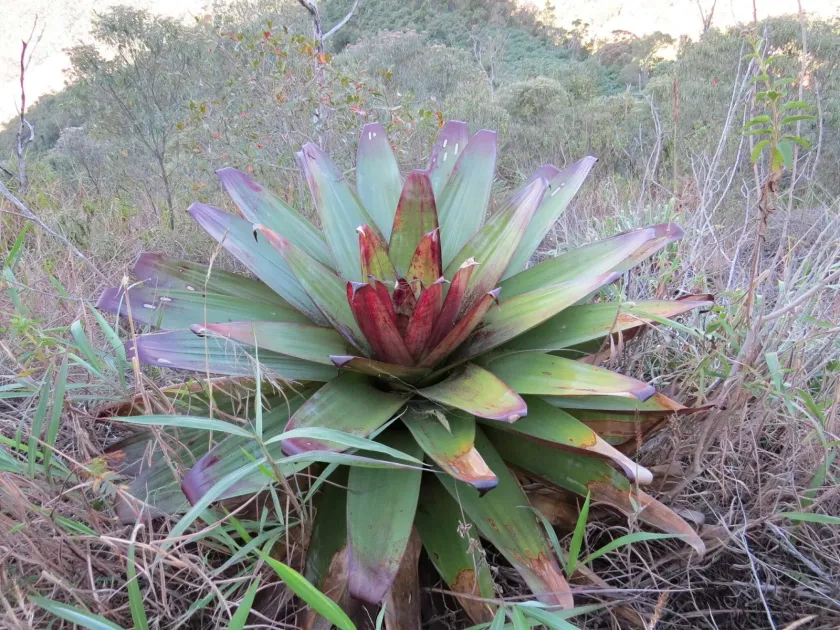
Alcantarea imperialis is a stunning, slow-growing member of the Bromeliaceae family, native to the rocky inselbergs of the Organ Mountains in Rio de Janeiro, Brazil.
This species is highly prized for its immense size, with rosettes often spanning over 1.5 meters, featuring broad, thick leaves that can range from deep green to rich purple or burgundy hues.
The plant thrives in bright, filtered sunlight, which is essential to develop its distinct coloration and maintain a compact, vigorous growth habit over many years.
Regarding soil, it requires an extremely well-draining, loose mixture, typically composed of orchid bark, perlite, and high-quality peat moss, mimicking its natural epiphytic environment.
Watering management is critical; water should always be maintained in the central tank, but it must be replaced regularly to prevent stagnation and the buildup of minerals or decay.
Main diseases and pests
Scale insects and mealybugs are the primary threats, often found hidden deep within the leaf axils where they are difficult to reach with standard surface treatments.
Root rot remains the most common physiological disorder, usually triggered by waterlogged, heavy potting media or lack of sufficient drainage in the container.
Fungal infections can manifest if the central tank remains polluted or if the plant is subjected to poor air circulation in a high-humidity environment for too long.
Regular maintenance, such as flushing the central tank with clean water and monitoring for pests, is the best strategy for keeping the plant robust and disease-free.
If chemical intervention is necessary, it is recommended to use systemic horticultural soaps or oils that are safe for sensitive bromeliad tissues to ensure long-term plant health.