
Aechmea hybrid
Hybrids between Aechmea eurycorymbus, Aechmea aquilega, Aechmea blanchetiana and Aechmea callichroma
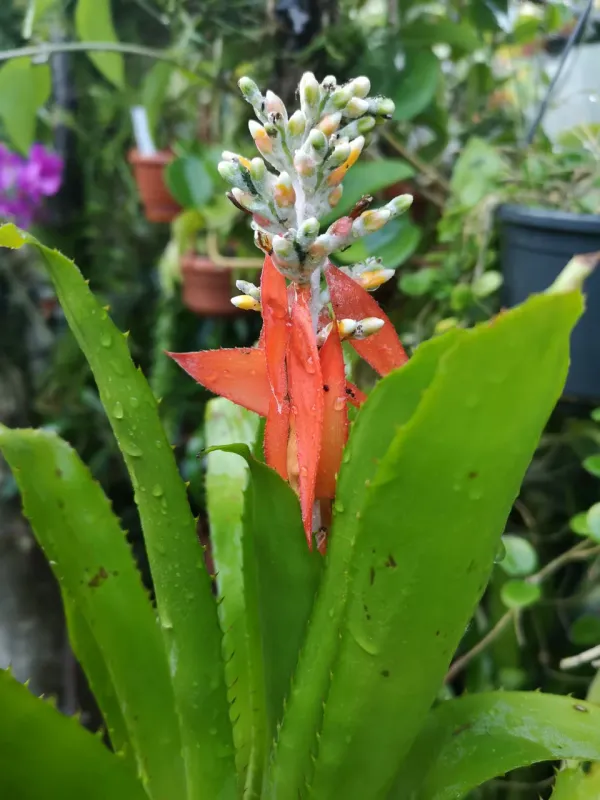
Description
Growing requirements
Aechmea hybrids, resulting from the breeding of species such as Aechmea eurycorymbus, A. aquilega, A. blanchetiana, and A. callichroma, belong to the Bromeliaceae family. These plants are prized for their structural foliage and long-lasting, vibrant inflorescences, making them a significant commodity in ornamental horticulture.
Successful cultivation requires a tropical climate with consistent temperatures between +20°C and +28°C. These hybrids are sensitive to frost and sudden cold drafts, which can cause severe cellular damage to the leaves and prevent the development of the flowering stalk.
High humidity is essential for the health of the plants, ideally maintained above 65%. In commercial greenhouse production, misting systems or evaporative cooling are frequently utilized to maintain optimal moisture levels without causing water stagnation in the center of the rosette.
The substrate must be highly porous and well-draining, mimicking the natural epiphytic or lithophytic growth environment. A mixture of perlite, peat, and aged bark provides the necessary aeration and moisture retention properties required for robust root system development.
Nutrient management involves both root feeding and foliar absorption. Fertilizers should be applied in weak concentrations, primarily directed into the central cup of the plant during the active growth season, ensuring that the water quality is free from high levels of chlorine or dissolved minerals.
Main diseases and pests
Mealybugs represent the most persistent threat to Aechmea hybrids, often hiding in the tight crevices of the leaf bases. Their presence leads to stunted growth and the transmission of viral pathogens, requiring diligent manual inspection and the application of systemic insecticides.
Scale insects can severely impact the aesthetic value of the foliage by causing discoloration and stunted development. Their waxy shells protect them from many contact sprays, necessitating the use of specialized horticultural oils or systemic chemical control methods.
Root and crown rot occur primarily due to poor drainage and overwatering. If the substrate remains saturated for too long, oxygen deficiency kills the roots, leading to the rapid decline of the entire plant. Proper irrigation management is the most effective preventative measure.
Spider mites are a common issue in dry greenhouse environments. They cause stippling on the leaves and can lead to premature leaf drop if left uncontrolled, emphasizing the importance of monitoring humidity and leaf hygiene throughout the year.
Fungal infections, such as those caused by Pythium or Phytophthora species, are common in poorly ventilated spaces. Ensuring proper airflow and maintaining hygienic conditions in the growing area are crucial for preventing these damaging pathogens from spreading across the crop.