
Aechmea fulgens
Aechmea fulgens Brongn.
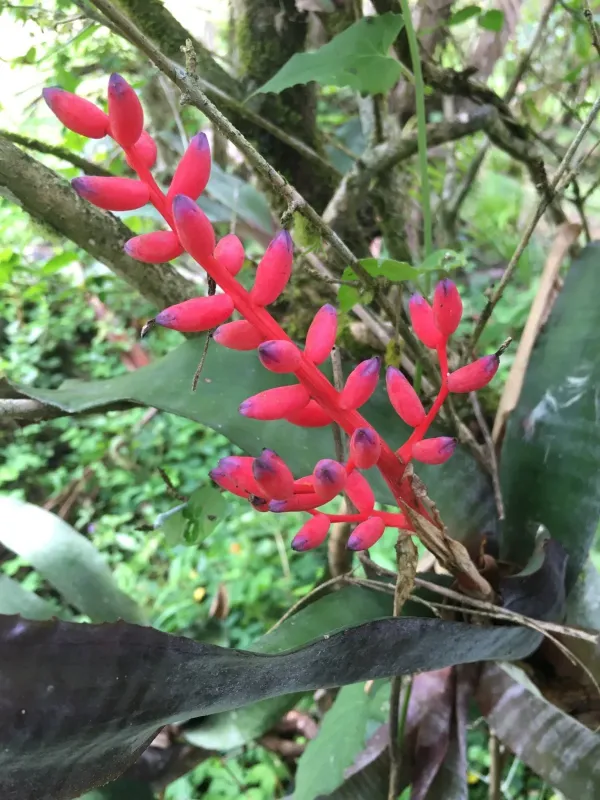
Description
Growing requirements
Aechmea fulgens is a tropical evergreen perennial belonging to the Bromeliaceae family. Native to the rainforests of Brazil, it is classified as an epiphyte, naturally anchoring itself onto trees and capturing moisture and nutrients from the air and debris.
The plant requires a warm climate with temperatures typically ranging between 20°C and 26°C. It is intolerant of frost and cold drafts, which can cause significant tissue damage and reduce the plant's overall vitality in indoor or greenhouse settings.
Lighting should be bright but indirect; direct exposure to intense noon sun can scorch the foliage. In lower light conditions, the plant may remain vegetative without producing its characteristic inflorescence.
Soil requirements involve a highly porous, well-draining medium. A mix composed of orchid bark, peat moss, and perlite provides the necessary structure and aeration to prevent root rot while retaining sufficient moisture.
Watering is unique for this species; water should be poured into the central rosette or 'tank,' which is the primary organ for water absorption in the wild. Ensuring fresh water in the tank regularly prevents the buildup of stagnant pollutants.
Main diseases and pests
Common pests affecting Aechmea fulgens include mealybugs and scale insects. These pests often congregate at the base of the leaves and within the leaf axils, necessitating manual removal or the application of systemic horticultural soaps.
Root rot is the most critical threat to the plant, usually triggered by waterlogged soil combined with poor ventilation. Ensuring an efficient drainage system at the bottom of the container is essential for plant longevity.
Fungal leaf spot diseases can develop if the foliage remains wet for too long in cool, dark environments. Promoting air circulation is a primary preventative measure to ensure that the leaf surfaces stay dry after misting.
Spider mites can become an issue in low humidity environments. Regular misting and monitoring are necessary to prevent infestations that can quickly yellow and weaken the plant's foliage.
Lack of proper nutrient balance can weaken the plant's natural defenses, making it susceptible to secondary infections. Using a diluted, balanced fertilizer specifically formulated for epiphytic plants during the growing season is recommended.