
Fragrant agrimony
Agrimonia procera Wallr.
Description
Growing requirements
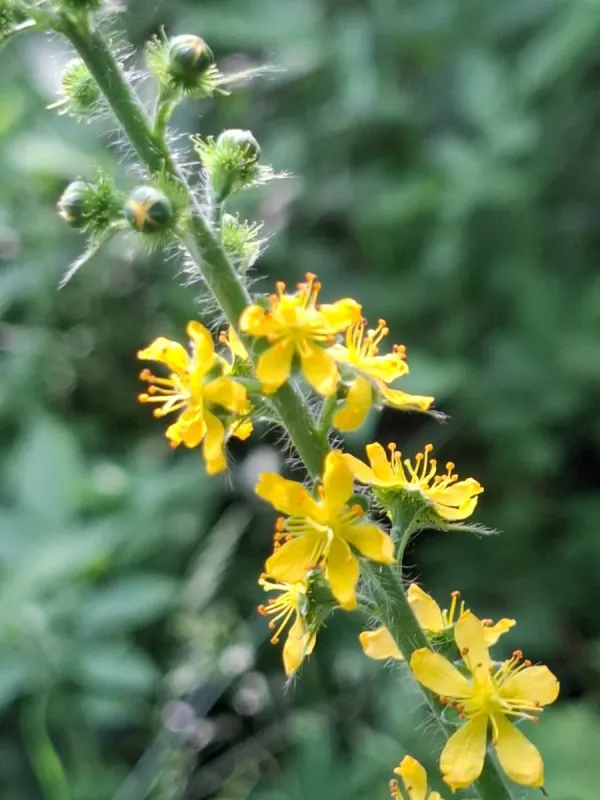
Fragrant agrimony (Agrimonia procera Wallr.) is a perennial herbaceous plant belonging to the Rosaceae family. It is distinguished from the common agrimony by its larger stature, fragrant scent resembling apricots, and specific glandular hair distribution on its foliage.
The plant thrives in moist, calcium-rich, and loamy soils. It prefers semi-shaded environments, mirroring its natural habitats such as forest edges, clearings, and damp meadows. While it can tolerate full sun, excessive heat and drought can significantly reduce the concentration of essential oils in the leaves.
Originating from Europe, this species requires a temperate climate to reach its full vegetative potential. Growers should ensure that the planting site has good soil aeration, as the root system, although robust, is susceptible to rot in waterlogged or heavy clay conditions without drainage.
The biological cycle of the fragrant agrimony involves a rosette stage during the first year, followed by the development of tall, spike-like flowering stalks in subsequent years. The plant typically reaches heights between 100 and 150 cm depending on nutrient availability.
Agronomic management requires consistent monitoring for soil moisture levels during the early growth phase. Once established, the plants are fairly hardy, though mulching is recommended to maintain soil temperature consistency and inhibit weed growth in commercial plots.
Harvesting
The primary economic value of Agrimonia procera lies in its application in pharmacology and herbal medicine. The aerial parts are harvested for their anti-inflammatory, astringent, and digestive health benefits, derived from tannins, flavonoids, and volatile compounds.
Harvesting is traditionally performed during the peak flowering stage, usually between July and August. Careful cutting of the flowering stems ensures that the plant retains enough energy to regenerate for the following year's growth.
Processing involves rapid drying in well-ventilated, shaded areas to preserve the volatile oils. Temperatures during industrial drying should not exceed 40 degrees Celsius to prevent the oxidation of active compounds that give the plant its characteristic fragrance.
Once dried, the herb should be packed in breathable containers or paper sacks to prevent moisture accumulation. Proper storage conditions are essential for maintaining a shelf life that meets quality standards for herbal supply chains.
Typical pests and diseases include occasional fungal leaf spots in overly humid seasons and aphids during early spring growth. Implementing integrated pest management strategies, such as biological control or proper spacing, is usually sufficient to manage these risks without heavy chemical intervention.