
Agave undulata
Agave undulata Klotzsch
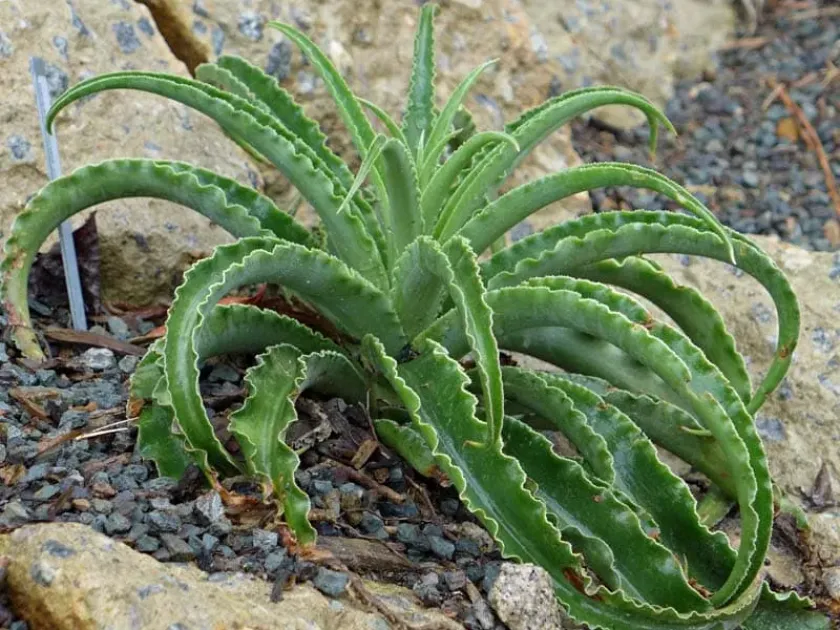
Description
Growing requirements
Agave undulata is a remarkable member of the Asparagaceae family, known for its distinctive wavy leaf margins. This succulent is native to the arid landscapes of Central America, where it thrives in conditions that would be challenging for most other plant species.
The plant requires full sun exposure to maintain its structural integrity and unique form. Insufficient light leads to etiolation, where the plant loses its compactness, becoming structurally weak and more susceptible to environmental stressors.
Well-draining, gritty soil is paramount for the health of Agave undulata. A mixture containing pumice, coarse sand, and a small portion of organic matter provides the aeration necessary for the roots to breathe and prevents water accumulation.
Climate requirements include warm temperatures with low humidity. This species is not frost-hardy and should be kept in protected environments if temperatures drop significantly, ensuring the plant remains healthy throughout the year.
Proper cultivation involves a cyclical watering schedule that mimics natural desert conditions. It is essential to allow the growing medium to dry out completely between waterings to prevent the development of root diseases.
Main diseases and pests
Mealybugs are a significant pest for Agave undulata, often hiding in the crevices between leaves. Regular inspection and the use of systemic insecticides are the most effective management strategies to keep the plant infestation-free.
Root rot is the most common pathology, typically triggered by overwatering or poor drainage. Once established, it is difficult to treat, making prevention through controlled hydration the most important aspect of management.
Scale insects can also colonize the leaf surface, creating small, hard bumps. These should be removed manually or treated with horticultural oils to prevent them from sapping the plant's vigor.
Fungal leaf spots can occur when air circulation is poor or humidity is too high. Improving ventilation and maintaining a dry environment around the leaf base are crucial for preventing these infections.
Damage from rodents can occur in outdoor plantings, where they might gnaw on the juicy leaves. Protective netting or fencing is recommended if the plants are situated in areas with high wildlife activity.