
Sisal agave
Agave sisalana Perrine
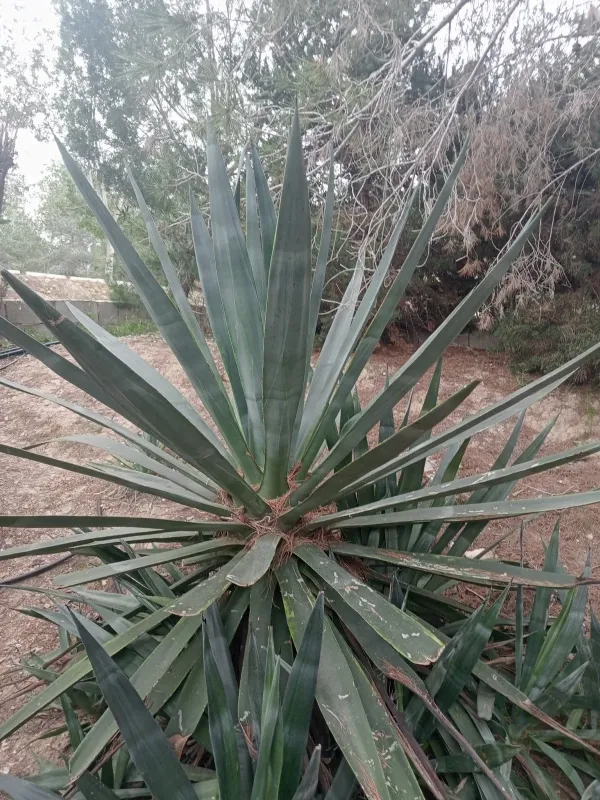
Description
Growing requirements
Sisal agave (Agave sisalana) is a perennial succulent belonging to the Asparagaceae family. While native to Mexico, it has become a major industrial crop in tropical regions of Africa, South America, and Asia, where it thrives in the warm climate.
The plant requires a tropical climate with a stable temperature range of 20°C to 30°C. It is extremely sensitive to frost, which can destroy the plant's vascular system, limiting its cultivation to frost-free geographical latitudes.
Soil requirements for sisal include well-drained sandy or loamy soils. Good drainage is essential, as stagnant water in the soil promotes root rot and fungal infections, which are major threats to the survival of the agave plants.
The plant is highly drought-tolerant, storing water in its thick, fibrous leaves. However, for industrial fiber production, regular rainfall or supplemental irrigation is required to ensure consistent leaf growth and yield quality.
Agronomic practices involve planting bulbils or suckers in orderly rows to allow for efficient management and harvesting. Planting density is strictly controlled to ensure each plant receives adequate sunlight and ventilation.
Yield
Sisal agave is primarily cultivated for its high-quality, durable fibers extracted from its long, sword-shaped leaves. These fibers are recognized globally for their strength, resistance to saltwater, and biodegradability.
A mature sisal plantation can produce between 1 and 2 tons of dry fiber per hectare annually. Yield depends heavily on the age of the plants, the fertility of the soil, and the management of the harvesting cycle over the plant's lifespan.
The fiber is widely used in maritime industries for ropes, cords, and cables, as well as in the textile industry for carpets, mats, and paper products. Recent advancements have expanded its use into the automotive sector as a reinforcing material in composites.
A unique botanical feature is the plant's monocarpic nature, meaning it flowers once and then dies. Typically, the productive life of a sisal plant spans 7 to 10 years, after which the plantation must be replanted to maintain productivity.
By-products of sisal processing include leaf juices that can be used for biofuel production and organic residues that serve as effective fertilizers, enhancing the sustainability of the agricultural process.
Main diseases and pests
Fungal diseases, such as leaf spot (caused by various pathogens), are the most common health issues for sisal. These are often triggered by high humidity levels, necessitating proper spacing between plants to improve airflow.
The sisal weevil (Scyphophorus interstitialis) is the most significant pest. The larvae bore into the core of the plant, causing internal decay and structural failure, which often leads to the death of the entire plant.
Integrated pest management (IPM) is crucial, relying on field sanitation and the removal of infected plants to prevent the spread of weevils. Monitoring via pheromone traps is standard practice on large-scale commercial plantations.
Chemical control should be used judiciously, prioritizing environmental health. Agronomists often recommend crop rotation or fallow periods to break the life cycles of pests and reduce the accumulation of soil-borne pathogens.
Strict quarantine protocols for planting materials are essential to prevent the introduction of aggressive strains of pathogens or exotic pests into new areas, ensuring the long-term viability of the regional sisal industry.
Harvesting
The harvesting process starts approximately 3 to 4 years after planting. Leaves are cut by hand or with specialized machinery near the base of the plant, leaving the central core intact to ensure continued leaf development.
Timing is critical: leaves must be harvested when they reach maximum fiber maturity. If harvested too early, the fiber quality is poor; if harvested too late, the leaves become overly woody and difficult to process.
Once harvested, leaves must be processed at a decortication plant within 24 to 48 hours. Delayed processing leads to leaf fermentation, which causes undesirable fiber discoloration and a significant reduction in tensile strength.
Decortication involves mechanical extraction of fibers from the pulp, followed by thorough washing in water to remove sugars and organic materials. The resulting long fibers are then sun-dried until the moisture content is optimal for storage.
Finally, the dried fiber is graded according to length, color, and cleanliness before being baled for shipping. Proper drying and grading are key steps in determining the market value and industrial application of the finished fiber product.