
Agave horrida
Agave horrida Lem. ex Jacobi
Description
Growing requirements
Agave horrida is a species of succulent belonging to the Asparagaceae family. Native to the arid regions of Mexico, specifically in the states of Morelos and Puebla, this plant is well-adapted to rocky and dry environments.
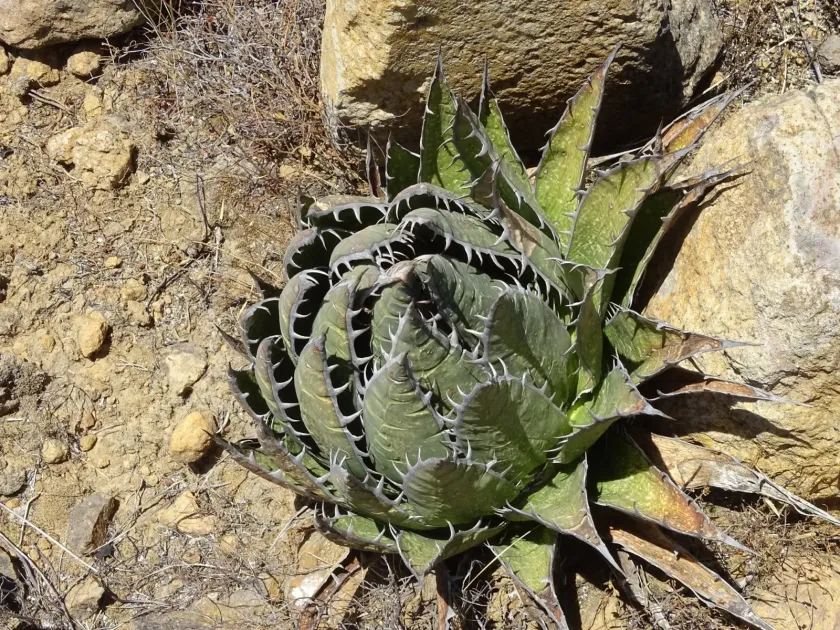
Botanically, it is characterized by a compact rosette of dark, rigid leaves that feature prominent black or dark brown marginal teeth and a sharp, sturdy terminal spine. It grows slowly, making it a desirable specimen for collectors.
The plant requires high levels of light to maintain its structural integrity and leaf coloration. Full sun or very bright indirect light is essential for healthy development throughout the growing season.
Soil requirements focus on extreme drainage. A typical commercial cactus mix amended with additional inorganic materials such as pumice or coarse grit is ideal to prevent moisture retention.
Proper agronomic care involves a distinct period of dormancy in winter. During this time, temperatures should be cool, and water should be withheld almost entirely to avoid root damage.
Main diseases and pests
Agave horrida is commonly affected by mealybugs, which can settle in the tight leaf axils, making them difficult to detect and eradicate manually.
Root rot, often caused by overwatering or poorly draining soil, remains the primary cause of mortality for this species in cultivation environments.
Fungal leaf spot diseases may appear if the plant is kept in conditions of high humidity with stagnant air, which compromises the cuticle of the leaves.
To combat pests, systemic insecticides or targeted applications of horticultural soap are recommended, provided the foliage is thoroughly dried after treatment.
Maintaining a clean, well-ventilated growing environment and ensuring the substrate is completely dry between waterings are the most effective preventative measures.