
Fox tail agave
Agave attenuata Salm-Dyck
Description
Growing requirements
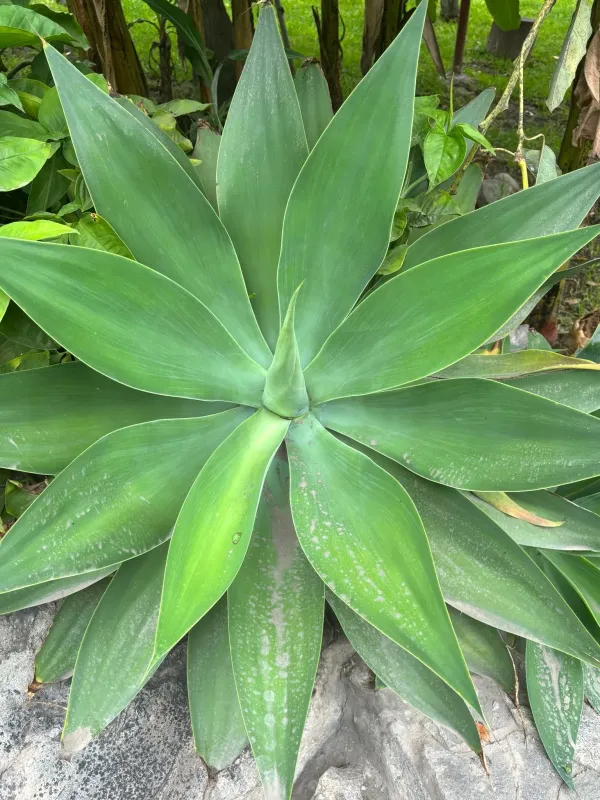
Agave attenuata Salm-Dyck, commonly known as the Fox tail agave, belongs to the Asparagaceae family. It is a distinctive evergreen succulent that stands out from other agaves due to its spineless, soft, and flexible leaves.
Originating from the central Mexican plateau, this species is well-adapted to high-altitude environments where it benefits from moderate temperatures and well-drained volcanic or rocky soils.
For optimal growth, the culture requires a site that provides bright, filtered sunlight. While it can handle full sun, protection from intense afternoon heat prevents leaf scorching and maintains foliage health.
The soil must be porous and provide excellent drainage. A mix tailored for succulents, consisting of coarse sand, pumice, and minimal organic matter, is considered ideal for long-term health.
Climatic requirements are specific: the plant thrives in temperatures between 18 and 25 degrees Celsius. It is not frost-hardy and requires relocation to a sheltered environment if outdoor temperatures drop near freezing.
Main diseases and pests
Root rot is the most significant physiological threat, usually caused by overwatering or poor soil drainage. Maintaining a dry cycle between watering sessions is essential to prevent tissue death.
Mealybugs are the primary pest concern, as they often hide deep within the dense rosettes where they feed on sap and excrete honeydew, which can attract secondary fungal infections.
Spider mites can also become a problem during periods of low humidity or poor airflow. Their presence is indicated by fine webbing and stippling on the succulent leaf surfaces.
Integrated pest management suggests using biological controls or neem oil sprays as a preventative measure to keep the foliage clean and healthy throughout the growing season.
To avoid infestations, it is crucial to keep the area around the base of the plant free from decaying organic debris, which serves as a breeding ground for pests and pathogens.