
Lechuguilla agave
Agave lechuguilla
Description
Growing requirements
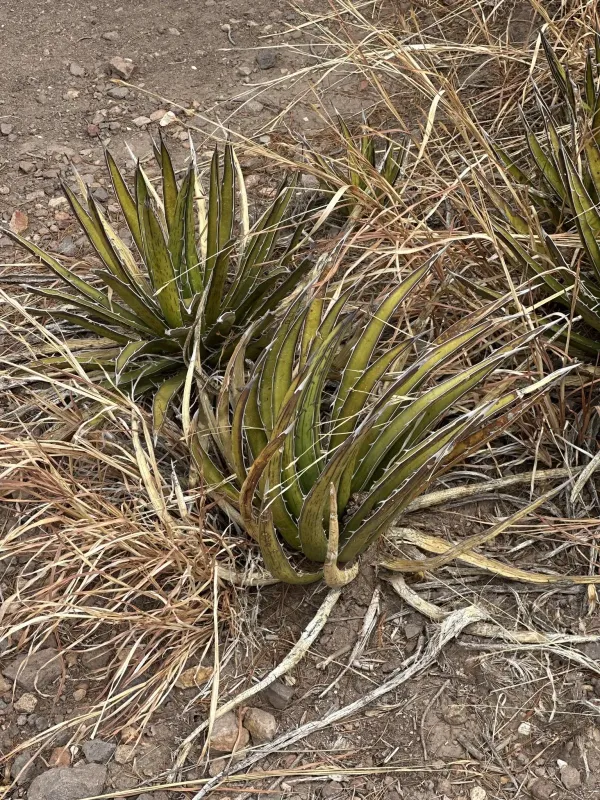
Lechuguilla agave (Agave lechuguilla) is a member of the Asparagaceae family, recognized as a hardy succulent native to the Chihuahuan Desert. The plant is characterized by its compact rosette structure, consisting of stiff, sharp-pointed leaves that thrive in arid environments.
The natural range of this species extends across northern Mexico and the southwestern United States. It is perfectly adapted to rocky, limestone-rich soils and extreme temperature fluctuations, which are typical of desert landscapes.
The species has very low water requirements, making it an excellent candidate for utilizing marginal and degraded lands. Its metabolism is specifically designed to manage high heat levels, allowing the plant to remain healthy during long periods of drought.
Botanically, it is a monocarpic perennial that stores energy within its thick leaves. Once mature, it sends up a tall flowering stalk, after which the parent plant typically dies, having invested all its resources into reproduction.
In agriculture and industry, the plant is primarily valued for its durable fibers known as ixtle. These fibers are strong and resistant to environmental degradation, serving as a vital resource for traditional and modern manufacturing applications.
Main diseases and pests
Over-harvesting of wild populations is the primary threat to the stability of the plant. Without proper management of collection rates, the regenerative capacity of the ecosystem can be significantly diminished.
Pests, such as various agave snout weevils, represent a serious danger to the plant's structural integrity. These insects bore into the center of the rosette, often causing the rapid collapse of the entire plant.
Fungal infections can develop when the plant is subjected to poor drainage or overly humid conditions. Such diseases usually manifest as rot at the base of the leaves, spreading quickly throughout the succulent tissues.
Environmental stress, including unexpected freezing temperatures, can cause cell rupture in the leaves. While the plant is drought-resistant, its tolerance to prolonged, intense cold is limited, which can affect its overall health.
Physical damage from wildlife or heavy grazing can also introduce pathogens into the leaf tissues. Implementing proper protection for cultivated areas is essential to maintain a healthy and productive crop yield.
Harvesting
Harvesting involves the strategic removal of the most mature leaves from the rosette. This technique ensures that the younger, central leaves are preserved, allowing the plant to maintain its growth cycle and survive the process.
Manual harvesting is the most common method, requiring specialized tools to carefully cut the base of the leaf. Workers must wear protective gear to prevent injuries caused by the sharp terminal spines present on every leaf.
After collection, the leaves undergo decortication, where the succulent material is stripped away to reveal the fiber underneath. This is often achieved using a motorized or manual scraper that cleans the leaf fibers effectively.
The raw ixtle fiber is then spread out in the sun to dry completely. This step is crucial, as it removes remaining vegetable matter and naturally lightens the fiber, preparing it for subsequent cleaning and processing into commercial threads.
The resulting fibers are highly prized for their strength and longevity, used to produce everything from high-quality brushes to heavy-duty ropes. This sustainable harvest practice supports the continued use of the species as a valuable industrial resource.