
Aframomum daniellii
Aframomum daniellii
Description
Sowing dates
Propagation of Aframomum daniellii in its natural habitat occurs primarily through vegetative means by dividing the branched rhizomes. Planting these rhizome segments is typically carried out at the onset of the rainy season, which provides the plant with sufficient moisture for successful establishment during its initial growth weeks.
When using seeds for propagation, it is essential to consider their low germination rate after prolonged storage, which is why fresh material is highly recommended. Seeds are sown in a prepared nutrient-rich substrate with high organic matter, maintaining a stable soil temperature around 25-28 degrees Celsius.
Site preparation requires thorough weeding, as the culture is sensitive to competition for nutrients during the early stages of development. The recommended planting pattern is approximately 1x1 meter, which allows the plant to form dense, healthy clusters as it matures.
The optimal timing for field operations aligns with high air humidity periods, which is critical to prevent the desiccation of young shoots. The plant exhibits vigorous growth provided that the integrity of the root system is maintained during transplanting or division procedures.
Post-planting, the soil around young plants should be mulched to retain moisture and prevent significant temperature fluctuations in the root zone. Irrigation during the first few months must be regular but without waterlogging, which could trigger rot in the rhizomes.
Growing requirements
Aframomum daniellii is a tropical plant with specific climatic requirements. Successful cultivation demands consistent high temperatures, ranging from 22 to 30 degrees Celsius, and complete protection from frost, as the species is highly sensitive to cold.
The crop prefers deep, well-drained loamy or sandy-loam soils enriched with humus. Soil acidity should be slightly acidic to neutral, which ensures optimal availability and uptake of essential micronutrients from the soil solution.
The plant has a high requirement for atmospheric humidity and needs significant rainfall during its active vegetative period. In regions with a distinct dry season, the installation of a supplemental irrigation system is a mandatory condition for maintaining plant vigor.
Light requirements for this species are characterized by a preference for dappled sunlight or partial shade. Harsh, direct midday sun can lead to leaf scorching, so agroforestry systems where the plant is grown under a tree canopy are frequently recommended.
Agronomic management includes regular application of organic fertilizers, such as compost or well-rotted manure. These inputs help maintain soil fertility and improve structure, which is vital for the full development of the plant's extensive underground organs.
Yield
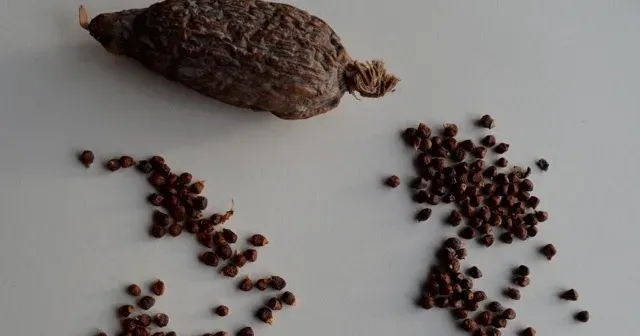
The yield of Aframomum daniellii depends directly on the age of the plantation and the quality of maintenance. The main commercial product consists of the seeds contained within dense capsules, which generally begin to reach full productive capacity by the third year after planting.
Average productivity per hectare can vary significantly based on planting density and the overall agronomic background. Under intensive management, characterized by consistent mulching and regular irrigation, yield metrics are significantly higher than those achieved through extensive cultivation methods.
The fruits are bright red capsules harvested as they reach maturity. It is crucial to avoid over-ripening, which can lead to the splitting of the fruit capsules and the subsequent loss of seeds, thereby decreasing the total volume of the harvested product.
Post-harvest processing of the seeds involves careful drying and cleaning from the fibrous husks. Adherence to proper drying technology ensures the preservation of essential oils and aromatic compounds, which directly influences the quality and market value of the spice.
Yield potential is also limited by the number of inflorescences formed by the plant in the lower parts of its stems. Proper pruning of old, dry stalks after the harvest encourages more active flowering and fruit development in the following season.
Main diseases and pests
The primary threats to Aframomum daniellii plantings are fungal infections of the root system, which typically arise as a result of excessive soil moisture. Water stagnation creates conditions that provoke the development of root rots, potentially leading to the death of entire clusters.
Pests such as various caterpillar species and weevils may damage young leaves and inflorescences. To control insect populations, it is recommended to conduct regular plantation monitoring and utilize integrated pest management strategies.
Among diseases, leaf spot infections caused by pathogenic fungi during periods of high humidity are notable. Prevention is best achieved through timely weeding and ensuring proper air circulation between plants within the rows to reduce micro-climatic humidity.
Soil-dwelling nematodes can also damage rhizomes, weakening the overall growth and vigor of the plant. Implementing crop rotation and treating the soil with organic nematicides help minimize the risk of infestation in planting materials.
Non-biotic threats include mechanical damage to plants caused by careless weeding, which creates entry points for various pathogens. Manual labor during routine maintenance requires precision to avoid damaging the shallow-growing rhizomes.
Harvesting
Harvesting Aframomum daniellii is conducted manually, owing to the delicate structural features of the plant. Workers carefully cut the matured capsules, taking care not to damage the flower stalks where future generations of fruit will develop.
The harvest period may span several weeks, as fruits on a single plant do not ripen simultaneously. Regular scouting of the plantation allows for the collection of the product at the stage of maximum maturity, when the concentration of aromatic compounds reaches its peak.
Upon collection, the fruits undergo a thorough sorting process to remove damaged or unripe specimens. High-quality raw material is then prepared for subsequent processing, ensuring the retention of the unique flavor profile and culinary qualities of the spice.
Drying of the harvested crop is conducted in natural conditions under cover or in specialized drying chambers at low temperatures. This is essential to prevent the evaporation of essential oils and the loss of the characteristic intense aroma of the seeds.
Packaging and storage of the final product require airtight containers to protect it from moisture and foreign odors. Proper storage conditions allow the spice to maintain its commercial qualities for extended periods without significant loss of flavor or potency.