
Aframomum angustifolium
Aframomum angustifolium
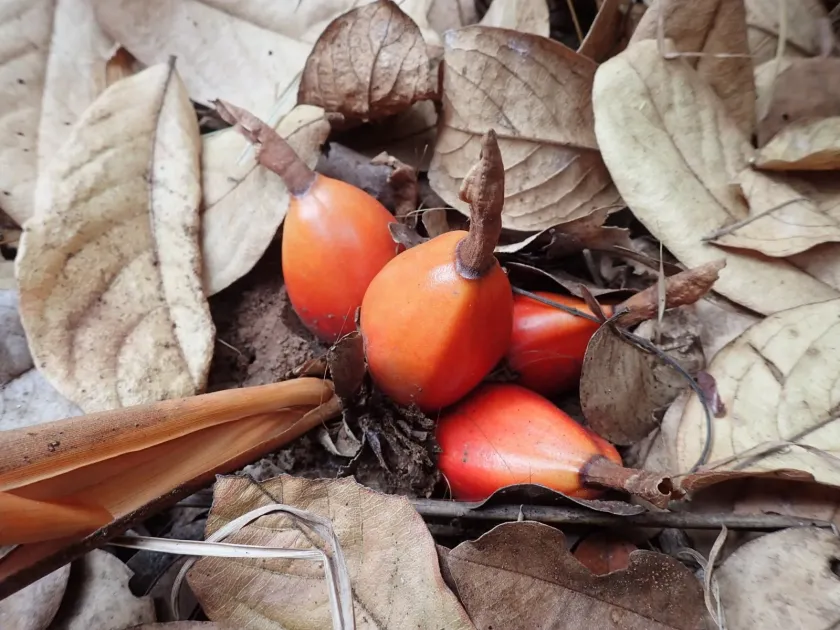
Description
Sowing dates
Sowing or planting of Aframomum angustifolium typically occurs at the onset of the rainy season to provide sufficient moisture for root establishment.
Propagation is most efficiently achieved through the division of rhizomes from healthy, mature mother plants during the dormant phase.
Fields should be prepared in areas with partial shade, mimicking the natural understory environment where these plants thrive in the wild.
Rhizome cuttings are planted at a shallow depth, ensuring the soil is loose and aerated to facilitate healthy shoot growth and nutrient uptake.
Spacing must be carefully considered to allow for the plant's spread, while maintaining enough cover to prevent excessive evaporation of soil moisture.
Growing requirements
As a member of the Zingiberaceae family, this crop demands high humidity levels and consistent tropical temperatures between 22 and 28 degrees Celsius.
Well-drained, fertile soil rich in organic matter is essential for supporting the biomass production required for high-quality fruit yields.
The plant performs best in protected environments where it is shielded from direct, intense sunlight, which can cause leaf scorch and dehydration.
Consistent rainfall or supplemental irrigation is required throughout the growing season to ensure the rhizomes do not dry out during the development stages.
Soil pH should ideally be slightly acidic to neutral, which optimizes the bioavailability of nutrients essential for the development of fragrant seed pods.
Yield
Yield stability in Aframomum angustifolium is highly dependent on the level of maintenance provided, particularly regarding soil fertility management.
The plant typically begins to produce harvestable pods as it matures, with productivity increasing significantly after the third year of cultivation.
Productivity is measured by the total weight of dried seed pods, which serve as the primary commercial product for the spice trade.
The quality of the final harvest, specifically its aromatic profile and concentration of essential oils, is influenced by the environmental conditions during ripening.
Farmers focused on sustainable cultivation practices often see consistent output, provided that the soil structure is preserved and moisture is balanced.
Main diseases and pests
Fungal pathogens represent the most significant threat to this crop, particularly in areas with poor drainage that lead to root rot.
Various soil-borne insects and nematodes can infest the rhizomes, potentially stunting growth and reducing the overall vitality of the plantation.
Bacterial wilt is another concern, requiring strict sanitation protocols to prevent rapid spreading across different sections of the field.
Integrated pest management is the preferred strategy, focusing on cultural practices rather than the heavy application of synthetic chemicals.
- Proper soil drainage management.
- Selection of disease-resistant rhizome stock.
- Regular inspection for pest activity.
- Sanitation of harvesting equipment.
Harvesting
Harvesting involves the careful collection of mature seed pods once they change color and develop their characteristic dry, fibrous exterior.
Since the pods develop at the base of the plant, harvesting is performed manually to avoid damaging the delicate rhizome network underground.
Immediately after collection, pods are cleaned and processed to remove any external debris and prepare them for the necessary drying stages.
Controlled drying is crucial to ensure the seeds attain the moisture levels required for long-term storage and preservation of essential oils.
The dried product is then ready for distribution, valued by chefs and traditional practitioners for its unique, pungent, and aromatic qualities.