
Aerangis stylosa
Aerangis stylosa
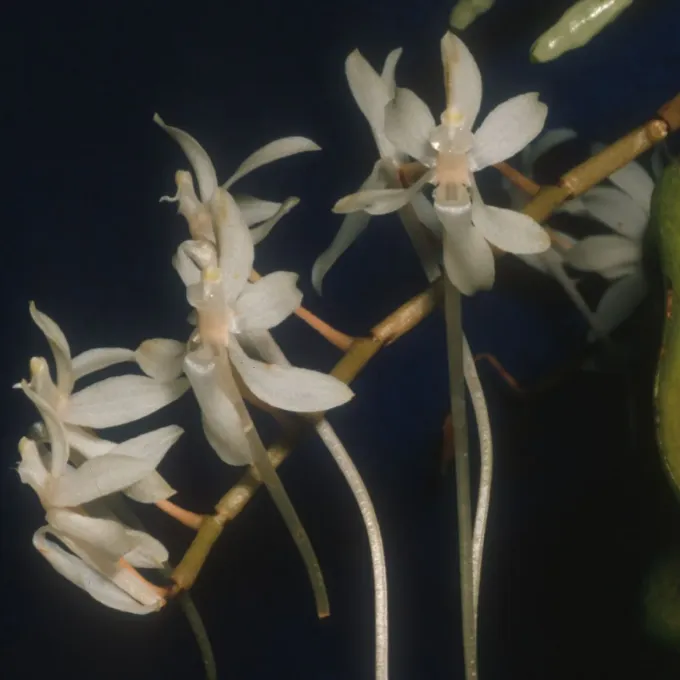
Description
Growing requirements
Aerangis stylosa is an epiphytic orchid belonging to the Orchidaceae family, native to the tropical forests of Madagascar and the Comoro Islands. In its natural habitat, the plant grows on tree trunks and branches, absorbing moisture from the atmospheric air and nutrients from rainfall.
This culture requires specific conditions that closely replicate tropical environments: high humidity levels ranging from 70% to 85%, and stable temperatures between +18°C and +25°C. The plant is extremely sensitive to sudden temperature fluctuations and drafts, which can cause premature leaf drop.
For cultivation, it is necessary to use a substrate based on coarse pine bark, charcoal, and sphagnum moss, which provides excellent aeration for the root system. A key requirement is high light intensity while protecting the plant from direct midday sun, which can cause leaf burns.
Watering should be performed with soft water, preferably rainwater or distilled water, as excess hardness salts are detrimental to the roots of the Aerangis. It is essential to ensure that water does not pool in the leaf axils after watering to prevent rot in the growth point.
The plant exhibits slow growth and requires regular fertilization with specialized orchid fertilizers during the active growing season. It is recommended to reduce the concentration of nutrients to half of the manufacturer's suggested dose to avoid damaging sensitive roots.
Main diseases and pests
Typical pests for this culture in greenhouses or indoor settings include scale insects and mealybugs, which hide in the leaf axils. Upon detection of colonies, mechanical removal of the parasites followed by treatment with systemic insecticides is recommended.
Fungal and bacterial rots, which develop under conditions of excessive moisture and stagnant air, pose the greatest threat. Damage to the growth point or root system often leads to the death of the entire specimen, so prevention strategies must include adequate ventilation.
Spider mites can attack the plant under conditions of critically low air humidity. Acaricides are used against them, strictly adhering to treatment intervals to ensure the eradication of subsequent generations of the pest.
Incorrect watering regimes can lead to the development of black leaf spot disease, caused by pathogenic microorganisms. Affected areas should be removed with a sterile tool, treating the cuts with crushed charcoal or fungicides.
To protect the plant from stress, it is necessary to regularly inspect the undersides of the leaves for signs of pest activity. Early detection of problems allows for the avoidance of harsh chemicals and helps preserve the aesthetic value of the orchid.