
Aerangis spiculata
Aerangis spiculata
Description
Growing requirements
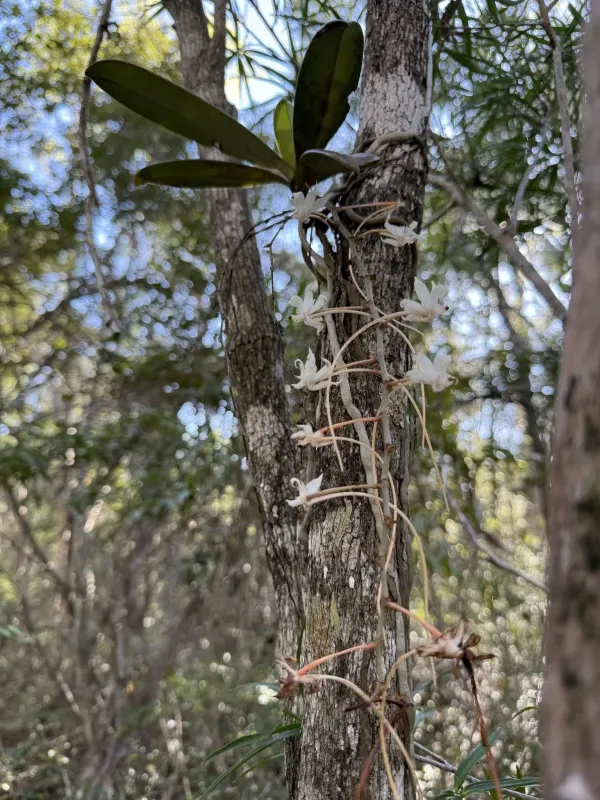
Aerangis spiculata is a rare epiphytic orchid species belonging to the Orchidaceae family. Native to the tropical forests of East Africa, specifically regions in Tanzania and Kenya, this plant naturally thrives in humid environments, attaching itself to tree bark and branches.
The plant is distinguished by a short stem and leathery, succulent-like leaves arranged in a basal rosette. Its most notable botanical feature is the production of long, pendulous inflorescences that bear delicate, fragrant white flowers, which are particularly aromatic during the evening hours.
For successful cultivation in a controlled environment, maintaining high air humidity (ranging from 70% to 80%) is essential. The species requires moderate tropical temperatures, generally between 20°C and 25°C, and benefits from a slight temperature drop at night to support its biological processes.
Lighting requirements necessitate bright, indirect light. Because the plant is sensitive to intense direct sun, which can scorch its leaves, shading or the use of specialized grow lights is recommended to ensure optimal photosynthetic activity without causing tissue damage.
As an epiphyte, Aerangis spiculata must be grown in specialized media. Using coarse bark, cork mounts, or wooden baskets is critical to allow air circulation around the roots. This method prevents water stagnation, which is vital for maintaining healthy root systems in this specific species.
Main diseases and pests
Common pests that may affect this culture include spider mites, mealybugs, and scale insects. These pests often colonize the underside of leaves or the base of the stem, requiring prompt mechanical removal or the application of suitable horticultural treatments to protect the plant's vitality.
Fungal and bacterial infections, such as root rot or leaf spotting, are frequent issues arising from poor air circulation or excessive moisture. To mitigate these threats, it is important to ensure that the roots dry out slightly between waterings and that the greenhouse environment provides adequate ventilation.