
Aerangis luteoalba
Aerangis luteoalba
Description
Growing requirements
Aerangis luteoalba is a distinctive species of epiphytic orchid belonging to the Orchidaceae family. It is native to the tropical montane forests of East Africa, where it thrives in humid environments fixed to the branches of host trees.
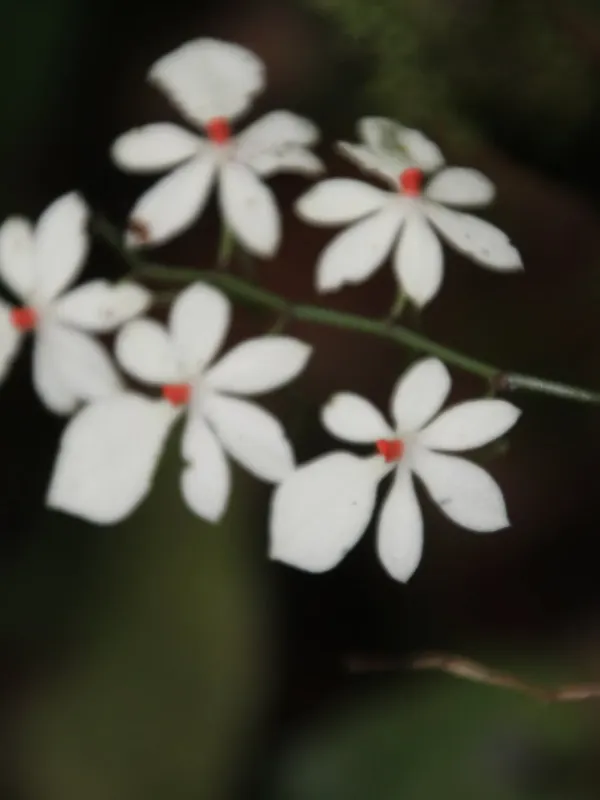
Botanically, this species is recognized by its small, fleshy, dark green leaves and a multi-flowered inflorescence. The flowers are notable for their creamy-white to yellow coloration and their capacity to emit a pleasant fragrance, especially during the evening hours.
Cultivation requires specific environmental parameters to mimic its native habitat. A well-ventilated space is essential, as the roots are adapted to constant airflow; stagnant air often leads to the decline of the plant’s vigor.
Light levels should be kept in the medium-low range. Exposure to direct intense sunlight is detrimental to the plant, causing leaf tissue degradation. Utilizing filtered light or shade cloth is highly recommended to protect the delicate foliage from overheating.
The substrate must provide excellent drainage while maintaining slight moisture. Most successful growers use specialized mixes consisting primarily of coarse bark, perlite, and occasional charcoal additions to ensure the root system stays healthy and aerated.
Main diseases and pests
Pathogenic fungi are the primary threat, often manifesting as root or stem rot if the orchid is kept in consistently waterlogged conditions. Proper irrigation management, ensuring the substrate dries slightly between waterings, is the most effective preventative measure.
Insect pests, specifically spider mites and scale insects, frequently target this species during periods of low humidity. Vigilance is required to monitor the undersides of the leaves, and immediate isolation is necessary if an infestation is detected to protect the collection.