
Aerangis citrata
Aerangis citrata
Description
Growing requirements
Aerangis citrata is a miniature epiphytic orchid belonging to the Orchidaceae family. This species is endemic to Madagascar, where it thrives in humid, shaded tropical forests at elevations between 800 and 1500 meters above sea level.
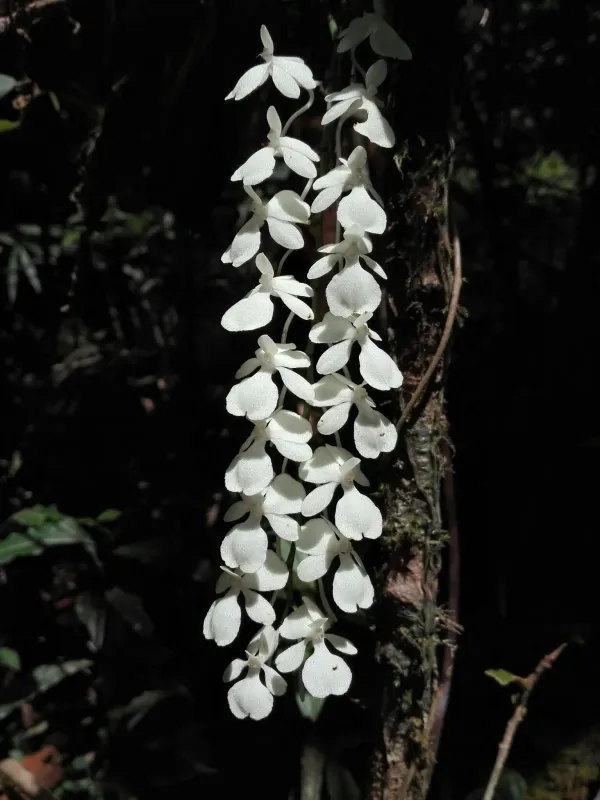
The plant is characterized by its compact habit and long, arching inflorescences. It produces a cascade of small, lemon-yellow flowers known for their distinctive citrus scent, which is most prominent during the evening hours.
Cultivation requires conditions that mimic its natural canopy environment. High humidity (above 65%) and filtered, bright light are essential. Direct exposure to intense sun must be avoided, as it can cause chlorophyll degradation and leaf scorch in this shade-loving species.
The preferred growing medium consists of coarse pine bark, charcoal, and perlite, often mounted on cork slabs to ensure maximum airflow around the roots. Aeration is critical, as the roots are adapted to being exposed to moist air rather than being buried in dense soil.
Temperature management should be maintained between 18 and 25 degrees Celsius. While it prefers consistent moisture, it requires a short drying period between waterings to prevent root rot, especially during the cooler winter months when metabolic activity slows down.
Main diseases and pests
The most significant threat to Aerangis citrata is the combination of poor air circulation and excessive moisture, which leads to bacterial soft rot. Once the infection reaches the central crown of the plant, recovery becomes extremely challenging.
Insect pests, specifically scale insects and spider mites, are frequent visitors that damage the plant's succulent leaves. These pests thrive in dry environments and can quickly weaken the plant by draining essential nutrients from the vascular system.
Management involves periodic inspection and the use of insecticidal soaps or systemic pesticides suitable for orchids. Early detection is the key to preventing infestations from spreading to other nearby sensitive plants.
Maintaining proper hygiene by sterilizing tools before trimming and using high-quality, pathogen-free substrate helps prevent the spread of diseases. If fungal leaf spots appear, affected areas should be removed surgically with a sterile blade.
Overall, successful maintenance relies on balancing moisture and ventilation. By ensuring that the roots and leaves are never waterlogged and the humidity remains consistent, growers can successfully mitigate the majority of common threats associated with this species.