
Aerangis brachycarpa
Aerangis brachycarpa
Description
Growing requirements
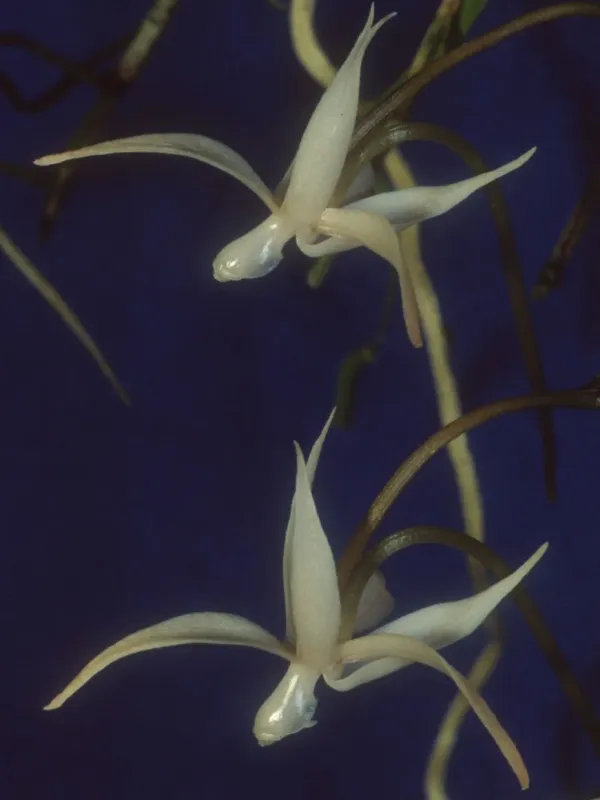
Aerangis brachycarpa is a perennial epiphytic plant belonging to the Orchidaceae family. Naturally occurring in the tropical regions of East Africa, this species thrives in humid mountain forests at altitudes of up to 2,000 meters above sea level.
The plant is botanically characterized by a short stem adorned with thick, leathery, dark green leaves. It possesses a robust root system adapted for absorbing moisture from the ambient air, which is a hallmark trait of epiphytic species.
To cultivate this plant successfully, high relative humidity levels, ideally maintained between 60% and 70%, are crucial. The temperature range should be moderately warm, typically between 20–25°C, with a necessary diurnal temperature drop to stimulate healthy growth.
When selecting a substrate, mounting on cork oak bark blocks or utilizing baskets filled with large-grade pine bark, charcoal, and sphagnum moss is recommended. The plant cannot tolerate stagnant water around its roots, making efficient drainage a fundamental aspect of its maintenance.
Lighting should be bright yet diffused. Exposure to direct sunlight can lead to leaf scorch, so providing light shading or placing the plant in east or west-facing orientations within a home or greenhouse environment is advisable.
Main diseases and pests
The primary threats to this species include fungal infections resulting from poor air circulation and excessive moisture in the substrate. Root and stem rot can spread rapidly, emphasizing the importance of regular ventilation in the growing area.
Common pests that infest this culture include scale insects and spider mites. These pests feed on the cellular sap, leading to leaf deformation and the eventual decline of the plant specimen if left untreated.
Management of pest outbreaks requires the application of appropriate systemic insecticides or acaricides, strictly following the manufacturer's dosage instructions. Affected plant parts should also be carefully cleaned.
Viral infection prevention is achieved by strictly adhering to sterile tool practices during pruning or repotting procedures. Any infected specimens must be isolated from the rest of the collection immediately.
Routine inspections of the underside of the leaves and the plant's axils are essential for identifying pest colonies or diseases at an early stage. Timely interventions ensure the long-term decorative value and vitality of the orchid.