
Aerangis biloba
Aerangis biloba
Description
Growing requirements
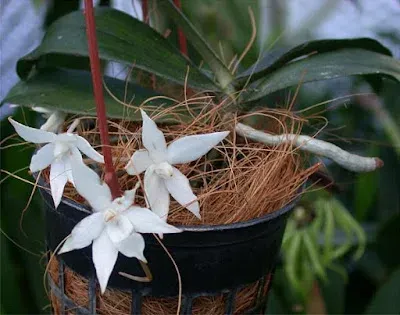
Aerangis biloba is a charismatic species of epiphytic orchid belonging to the Orchidaceae family. Native to the tropical forests of West and Central Africa, it thrives in warm, humid conditions where it typically grows on tree branches, anchoring itself with robust, velamen-covered roots.
For successful cultivation, the environment must mimic its natural tropical habitat. It requires high relative humidity, ideally between 70% and 80%, to maintain leaf turgor and support healthy growth. Proper ventilation is essential, as stagnant air often leads to fungal outbreaks.
The lighting requirements for Aerangis biloba involve filtered or dappled sunlight. Direct, intense solar radiation must be avoided to prevent thermal damage to the succulent leaves. Daytime temperatures should be kept within a warm range of 20 to 26 degrees Celsius for optimal metabolic activity.
When selecting a planting medium, it is crucial to prioritize aeration. Mounting on cork or bark slabs is the most successful method for this species, as it allows the roots to breathe and prevents waterlogging. If using pots, a very coarse bark-based substrate is recommended.
Watering frequency should be adjusted based on the drying cycle of the roots. The plants should be allowed to dry slightly between waterings to maintain the health of the velamen layer. Using purified or rainwater is highly recommended to avoid chemical accumulation from hard tap water.
Main diseases and pests
Fungal and bacterial rots are the most significant threats to Aerangis biloba, often triggered by excessive moisture combined with poor airflow. Once the crown or the root system begins to decay, the condition can progress rapidly and become fatal to the orchid.
Pest infestations, particularly spider mites and mealybugs, are frequent in indoor environments. These pests hide in the axils of the leaves, drawing sap and inducing systemic weakness, which often invites secondary infections by opportunistic fungi.
Preventative care involves consistent monitoring of the foliage and root health. If pests are identified, physical removal or the application of mild horticultural oils is preferred over harsh chemical treatments, which the sensitive orchid tissues may not tolerate well.
Nutrient deficiency or toxicity can also be a challenge; the species is sensitive to fertilizer salts. Using a dilute, balanced orchid fertilizer during the active growing season helps maintain plant vigor without stressing the root system with excessive salinity.
Good sanitation practices, including the sterilization of tools and maintaining a hygienic growing area, are vital. Removing dead organic matter and keeping the growing environment clean is the best strategy for avoiding chronic diseases in this epiphytic crop.