
Aerangis articulata
Aerangis articulata
Description
Growing requirements
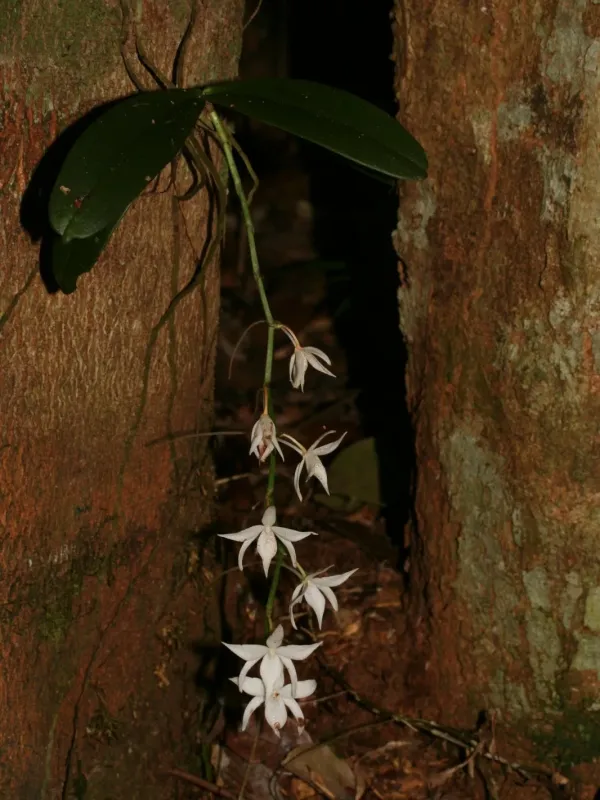
Aerangis articulata is a rare and highly sought-after epiphytic orchid species belonging to the Orchidaceae family. Native to the humid forests of Madagascar, this plant is characterized by its monopodial growth habit and striking, pendulous inflorescences that carry numerous fragrant, star-shaped white flowers.
To cultivate this species successfully, one must replicate its natural epiphytic environment. This requires high relative humidity, ideally between 60% and 80%, combined with excellent air circulation to mimic the breeze found in their native forest habitats and prevent moisture-related issues.
The cultural requirements dictate bright, indirect lighting. Direct sunlight should be avoided at all costs, as it will rapidly cause severe leaf burn. A position near an east-facing window or under specialized LED grow lights is often sufficient to maintain the plant's health and induce flowering.
Regarding the growing substrate, Aerangis articulata should be mounted on cork bark or grown in open-slatted wooden baskets. Traditional potting in dense media is discouraged because the roots require frequent, rapid drying cycles to stay healthy and avoid suffocation.
Watering should be managed carefully, ensuring the plant receives adequate moisture during its active growing season. During the cooler winter months, the watering frequency should be reduced, although the plant should never be allowed to dehydrate completely for extended periods.
Main diseases and pests
The most common threats to the health of this orchid are bacterial and fungal rot, which thrive in stagnant, excessively wet environments. Proactive management involves ensuring that the root system is well-ventilated and that the crown of the plant stays dry after watering.
Pests such as spider mites and scale insects can occasionally infest the foliage. Regular inspections of the undersides of the leaves are crucial. If an infestation occurs, it should be treated with appropriate horticultural oils or systemic insecticides compatible with sensitive orchid species.