
Aechmea nudicaulis
Aechmea nudicaulis (L.) Griseb.
Description
Growing requirements
Aechmea nudicaulis is a perennial epiphytic plant native to the tropical forests of Central and South America, belonging to the Bromeliaceae family. In its natural habitat, it typically grows on tree trunks and rocky surfaces, absorbing moisture and nutrients directly from the air and rain.
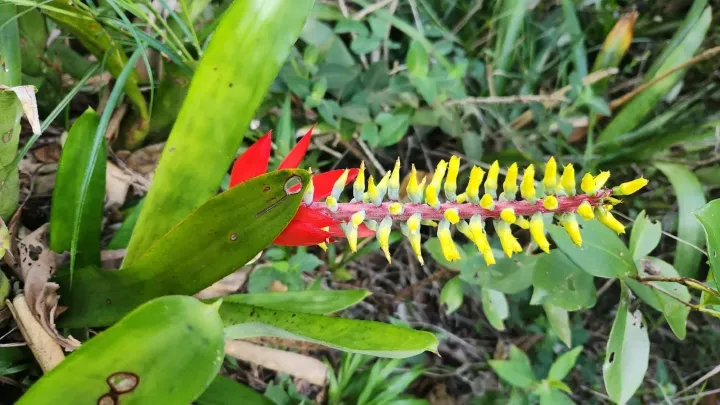
The plant features a basal rosette of stiff, leathery leaves that form a central tank, which is evolutionarily designed to store water. The inflorescence is characterized by a sturdy stalk bearing vibrant, colorful bracts that can last for several weeks, making it a popular choice for commercial floriculture.
Cultivation requires bright, indirect light; direct sunlight should be avoided to prevent leaf scorch. The ideal temperature range for this species is between 18 °C and 25 °C, with a preference for consistent conditions without extreme cold or heat, which can negatively impact the plant's metabolism.
Soil requirements for this bromeliad are specific to its epiphytic nature. A well-draining, airy substrate consisting of pine bark, peat moss, perlite, and charcoal is recommended to ensure that the roots receive sufficient oxygen and do not sit in stagnant water, which often leads to decay.
Watering practice involves filling the central rosette with clean water while keeping the potting medium slightly moist. During the dormant winter season, water should be applied less frequently to the substrate, although high ambient humidity levels must be maintained throughout the year.
Main diseases and pests
Scale insects are among the most common pests that affect Aechmea nudicaulis. These small parasites suck sap from the leaves, causing yellow spots and weakening the plant. Mechanical removal or the application of specialized horticultural oils is essential for control.
Spider mites can proliferate in environments where the air is excessively dry. Frequent misting and maintaining proper ventilation are primary defenses, though chemical acaricides may be required if an infestation becomes widespread across the plant collection.
Root rot is a critical threat typically caused by overwatering or using a medium with poor drainage. Once roots show signs of darkening and softening, it is crucial to repot the plant in a fresh, sterile medium after trimming away all necrotic tissue to prevent further spread.
Mealybugs tend to hide in the tight crevices where leaves meet the central tank. Regularly inspecting these areas and wiping the leaves with a damp cloth can help prevent a major outbreak, while systemic insecticides can be used for persistent cases.
Fungal leaf spot diseases may appear if the air circulation is inadequate or if water remains on the leaves for too long in cool conditions. Improving airflow and ensuring the plant dries out slightly between misting sessions helps keep these pathogens at bay.