
Aechmea fendleri
Aechmea fendleri Andre ex Mez
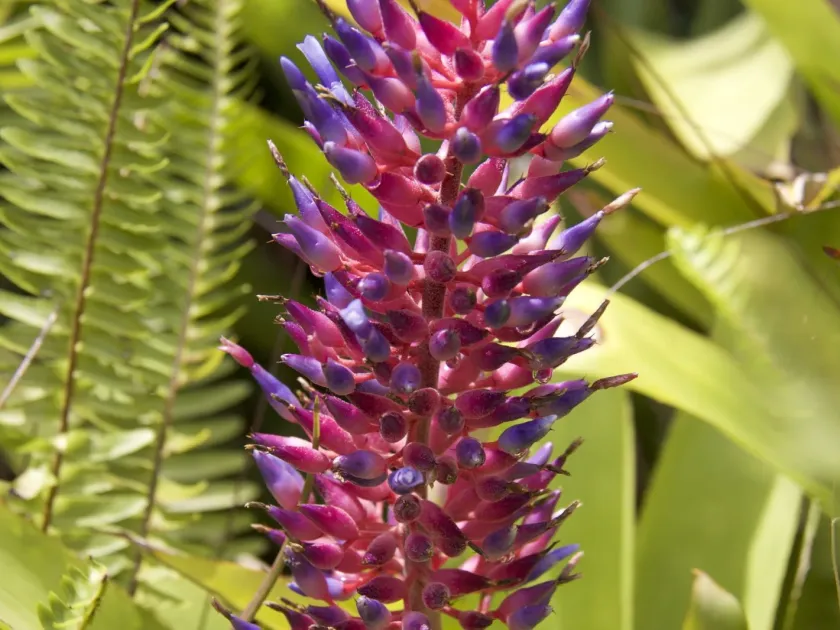
Description
Growing requirements
Aechmea fendleri is a perennial epiphytic plant belonging to the Bromeliaceae family. In the wild, this species is native to the tropical rainforests of South America, specifically Venezuela and Colombia, where it typically grows as an epiphyte on tree trunks or in rocky crevices.
Botanically, the plant forms a basal rosette of stiff, leathery leaves, often equipped with marginal spines. During the flowering phase, it produces a distinct spicate or paniculate inflorescence. The vibrant bracts are highly ornamental and can remain on the plant for a significant duration.
Successful cultivation requires a stable tropical climate with high relative humidity, which is essential for the proper physiological function of both the root system and the foliar structures. Ambient temperatures should remain between 20 and 25 degrees Celsius, as sudden cold snaps or frost can be lethal to the plant.
The growing medium must possess superior aeration and drainage properties, as water stagnation at the root zone quickly promotes decay. Ideal substrates consist of pine bark, peat moss, and sphagnum, creating a slightly acidic environment suitable for epiphytic growth.
Cultivation practices involve specific watering techniques: water should be poured directly into the central tank formed by the leaf rosette, mimicking its natural habitat. It is critical to use soft, room-temperature water to avoid the accumulation of mineral salts on the leaf surface.
Main diseases and pests
The primary threats to Aechmea fendleri include fungal infections that manifest under conditions of excessive moisture and poor air circulation. Root rot and phytophthora are common pathologies that require immediate isolation of the plant and targeted fungicide application.
Among the pests, scale insects and mealybugs pose the greatest danger, as they feed on the sap and weaken the plant's overall immunity. Additionally, if air humidity levels drop too low, spider mite infestations can occur, spreading rapidly throughout the rosette.
Mealybugs often sequester themselves deep within the leaf axils, making early detection challenging. Periodic visual inspections and prophylactic cleaning of the leaves with a damp cloth are highly recommended to prevent the establishment of pest colonies.
In cases of severe infestation, systemic insecticides should be utilized in strict accordance with manufacturer labels. Any leaf tissue showing significant necrosis should be removed carefully using sterilized pruning tools to prevent the further spread of infections.
Disease prevention relies heavily on maintaining optimal airflow and avoiding the excessive use of nitrogen-rich fertilizers, which tend to make plant tissues softer and more susceptible to pathogen attacks.