
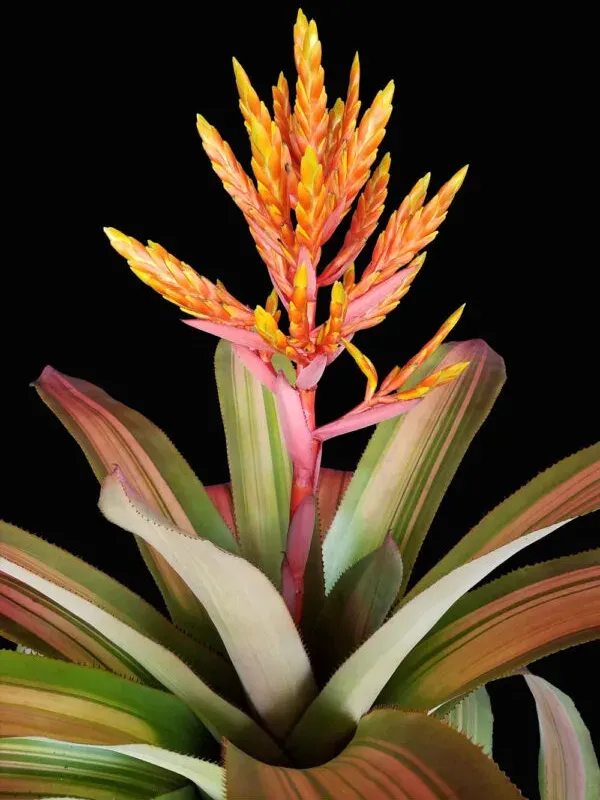
Aechmea hybrid
Aechmea eurcarymbus x (Aechmea chantinii x Aechmea tessmannii)
Description
Growing requirements
Aechmea hybrid is an ornamental culture belonging to the Bromeliaceae family. It is a sophisticated hybrid derived from tropical species, valued for its striking rosette structure and long-lasting inflorescences.
The plant originates from the tropical regions of the Americas and requires a stable, warm climate. It thrives in bright, indirect light, as direct sun exposure can severely damage its foliage through dehydration and scorching.
Botanical features are defined by a tank-like leaf rosette, which serves as the primary organ for water and nutrient absorption in an epiphytic or semi-epiphytic growth habit. The root system is primarily for anchorage rather than intensive nutrient intake.
Soil requirements involve a highly acidic, well-draining medium, typically composed of peat, pine bark, and perlite. Proper aeration of the substrate is essential to prevent root asphyxiation in a humid environment.
In commercial horticulture, this plant is cultivated exclusively for the indoor decorative market. Its ability to maintain structural integrity and color for several months makes it highly desirable for interior landscaping and floral retail.
Main diseases and pests
Pest pressure mainly comes from mealybugs and scale insects. These pests often hide at the base of leaves or within the central rosette, requiring thorough inspection and systematic application of horticultural oils or insecticides.
Root rot, often caused by overwatering or poor drainage, is the most common physiological disorder. A wet-dry cycle is recommended to ensure that the substrate does not remain constantly saturated, which prevents pathogen proliferation.
Fungal leaf spot diseases can occur if humidity levels are high while air circulation is stagnant. Ensuring constant airflow around the plant helps keep the foliage dry and healthy, preventing fungal spores from germinating.
Chlorosis is frequently observed when the plant is irrigated with hard, alkaline water. The accumulation of mineral salts at the leaf base can interfere with nutrient uptake and damage the sensitive tissues of the rosette.
Effective management of these threats relies on preventative care, including the use of high-quality distilled or rainwater and consistent monitoring of environmental parameters to keep the plant in its optimal growth state.