
Aechmea chantinii x Aechmea tessmannii
Aechmea chantinii x Aechmea tessmannii
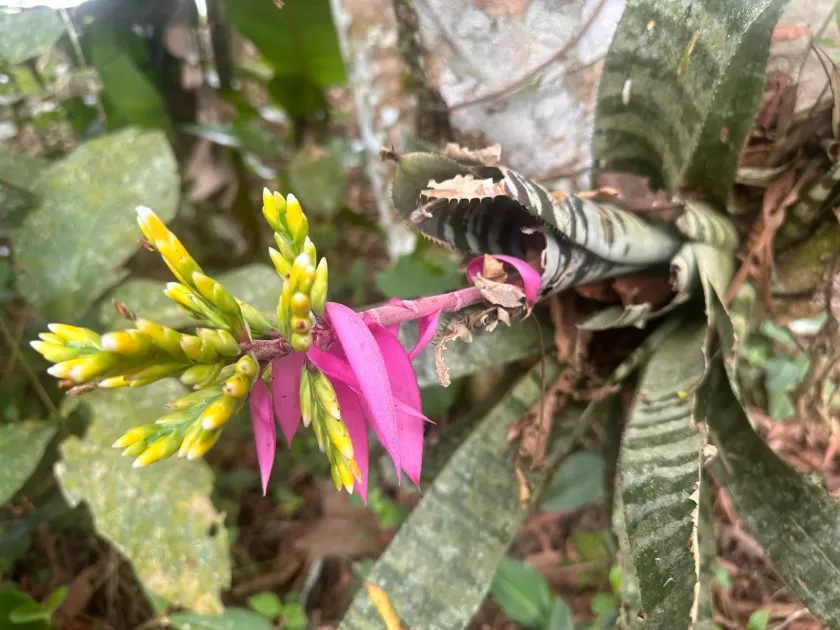
Description
Growing requirements
This hybrid belongs to the Bromeliaceae family, showcasing the unique structural characteristics of its parent species. Naturally adapted to tropical environments as epiphytes, these plants rely on specialized water-retention mechanisms within their leaf rosettes to thrive.
Optimal growth requires bright, filtered light. Exposure to direct noon sunlight can scorch the foliage, while insufficient light levels will hinder the development of the plant's characteristic vibrant markings and overall vigor.
The potting medium must be exceptionally well-draining and aerated. A standard epiphyte mix composed of orchid bark, perlite, and coarse peat is recommended to mimic the natural conditions of high-altitude forest canopies where these species originate.
Watering techniques are specific to the Bromeliad genus. The central rosette should be kept filled with clean, soft water, which should be refreshed periodically to prevent bacterial accumulation. The soil should remain slightly moist but never waterlogged.
Maintaining a stable temperature range is essential for the hybrid's health. It thrives best in environments between 20 and 26 degrees Celsius. Exposure to cold drafts or temperatures below 15 degrees Celsius can cause irreversible physiological damage.
Main diseases and pests
Fungal infections are the most significant threat, often induced by improper watering practices. High humidity levels combined with poor air circulation create a perfect environment for stem rot and leaf spot pathogens to flourish.
Scale insects are common pests that attach themselves to the underside of leaves or near the base of the rosette. Their feeding habits cause localized chlorosis and can stunt the plant's development if left untreated for an extended period.
Mealybugs represent another major concern, particularly in indoor environments. These pests hide in the tight crevices of the leaves, where they feed on sap and excrete honeydew, often leading to secondary fungal growth known as sooty mold.
Spider mites can become a nuisance during periods of low humidity. They typically manifest as fine webbing between leaves and can rapidly weaken the plant, leading to significant foliage drop if humidity is not managed.
Integrated pest management, involving regular physical inspection and the use of targeted systemic insecticides when necessary, remains the most effective strategy for preserving the long-term health of these ornamental plants.