
Aechmea chantinii
Aechmea chantinii (Carrière) Baker
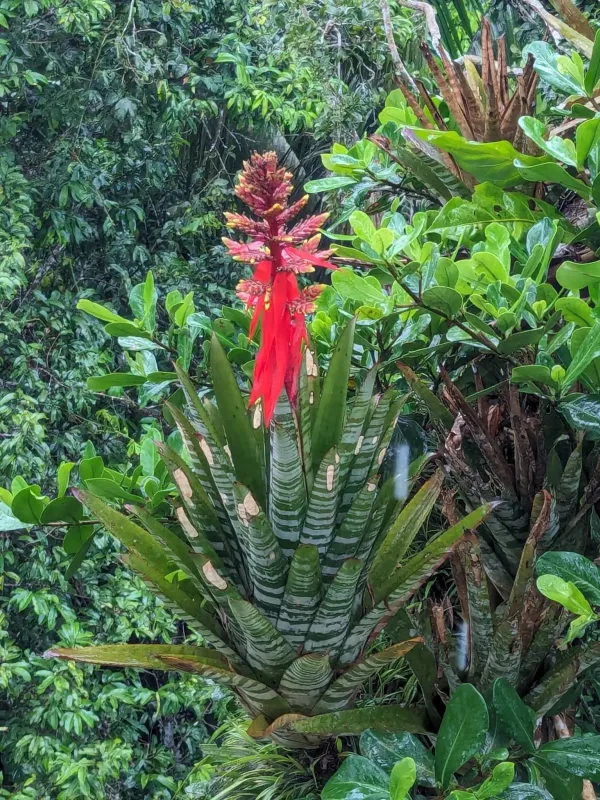
Description
Growing requirements
Aechmea chantinii belongs to the Bromeliaceae family and is native to the Amazon rainforests of South America. This species is highly valued for its striking, cross-banded foliage and spectacular inflorescence.
In terms of light requirements, Aechmea chantinii prefers bright, indirect sunlight. Exposure to harsh, direct sunlight will scorch the leaves, while insufficient light can cause the plant to lose its vibrant banding patterns.
The optimal temperature range is between 20°C and 25°C. The plant is sensitive to cold drafts and should never be exposed to temperatures below 15°C, which can cause severe physiological stress.
Irrigation should be performed by filling the central tank (rosette) with filtered or rainwater. The soil mix must be kept barely moist, allowing it to dry slightly between waterings to prevent root decay.
The ideal growing medium is a well-draining, acidic substrate. A mixture of pine bark, perlite, peat moss, and charcoal is recommended to provide both moisture retention and essential aeration for the root system.
Main diseases and pests
Mealybugs are the most common pests affecting Aechmea chantinii. These small insects tend to hide in the tight crevices of the leaf base, feeding on plant sap and producing sticky honeydew.
Scale insects present a significant challenge, appearing as hard brown shells on the leaves. Manual removal is often necessary for smaller infestations before applying systemic pesticides.
Root rot is a critical threat typically caused by waterlogged soil and poor drainage. If the central rosette remains full of water in cool, stagnant air, the plant becomes highly susceptible to fungal infections.
Spider mites may occur during periods of very low humidity. Keeping the ambient humidity high and occasionally misting the foliage helps prevent these infestations and promotes healthy growth.
To maintain plant health, it is essential to ensure good airflow within the greenhouse or indoor environment. Regular inspection of the leaf axils is crucial for early detection and control of potential pest outbreaks.