
Aechmea victoriana
Aechmea victoriana
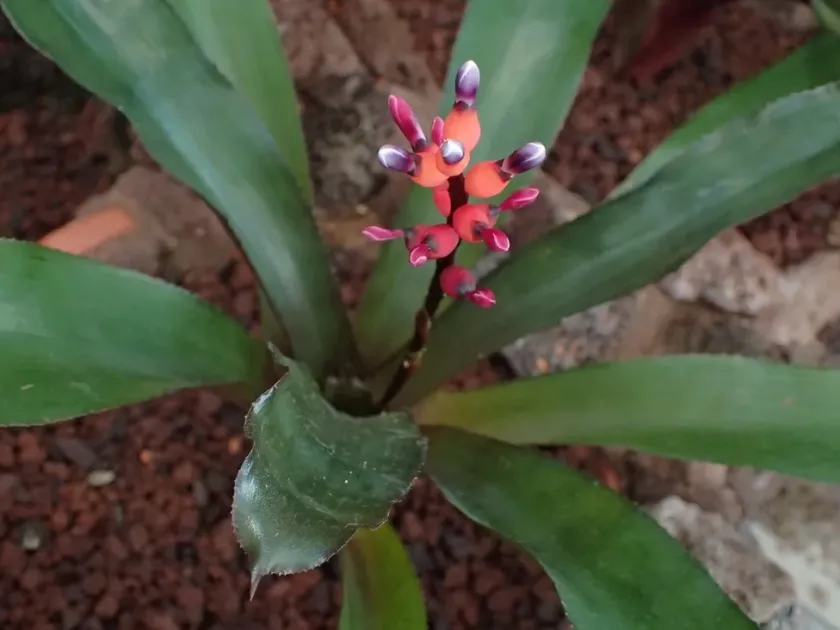
Description
Growing requirements
Aechmea victoriana is a tropical herbaceous perennial belonging to the Bromeliaceae family. Native to the rainforests of South America, this species naturally grows as an epiphyte, colonizing tree branches and utilizing its unique morphology to capture moisture and nutrients from the air.
The plant features a distinct, sturdy rosette of leaves that forms a natural central cup or tank. This structure is biologically significant, as it acts as a reservoir for rainwater and debris, which the plant breaks down to absorb essential minerals in its nutrient-poor natural environment.
To cultivate Aechmea victoriana successfully, one must provide bright, indirect light conditions. While the plant can tolerate lower light levels, bright, filtered light is essential to maintain its leaf coloration and encourage future flowering. Intense, direct sunlight should be avoided to prevent scorched foliage.
The growing medium must be highly porous and well-draining, mimicking the bark-heavy environment of forest canopies. A mixture of orchid bark, perlite, and high-quality peat is recommended to ensure that the roots have sufficient access to air and do not suffer from rot due to excessive moisture.
Watering practices are unique for this genus; water should be applied directly into the central rosette, keeping it filled with clean, soft water. In addition to rosette watering, the surrounding air humidity should be kept high, ideally between 60% and 80%, to support the plant's atmospheric absorption mechanisms.
Main diseases and pests
Aechmea victoriana is susceptible to common greenhouse pests, including mealybugs and scale insects. These pests often hide at the base of the leaves or in the crevices of the rosette, requiring careful manual inspection and the periodic application of appropriate contact or systemic insecticides.
The most significant pathological threat to this culture is crown rot or root decay, usually triggered by cold temperatures combined with stagnant, over-saturated soil. Providing good airflow around the plant and ensuring that the water in the tank is periodically replaced helps to minimize the risk of bacterial and fungal infections.