
Adenium swazicum
Adenium swazicum Stapf
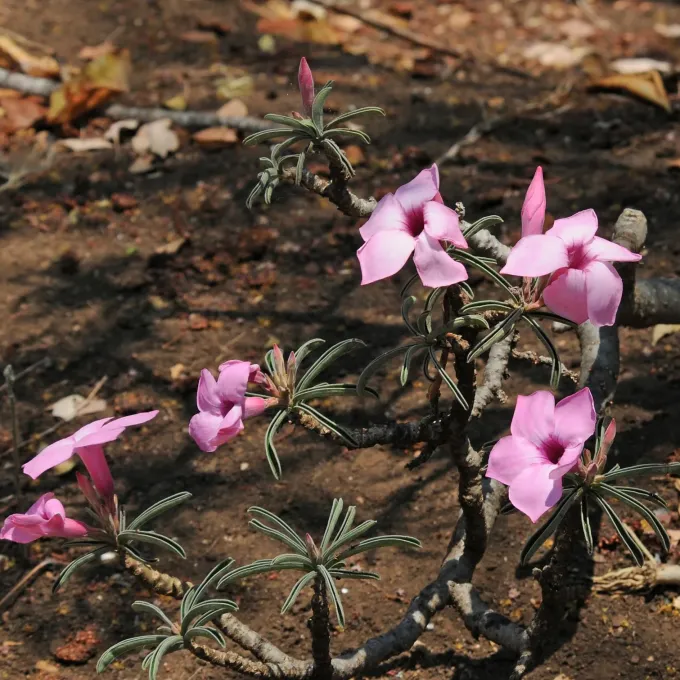
Description
Sowing dates
Adenium swazicum, a member of the Apocynaceae family, is a slow-growing succulent prized for its thickened caudex. Propagation is primarily achieved through seeds, which should be fresh to ensure high germination rates.
The sowing process is best initiated in spring to capitalize on increased daylight intensity. The ideal germination temperature ranges between +25°C and +30°C to trigger active growth.
A well-draining substrate composed of perlite, vermiculite, and coco coir is essential. Seeds should be sown on the surface or lightly covered to maintain consistent moisture.
Using a humidity dome or plastic cover is crucial for the first two weeks of development. Proper ventilation should be provided once the sprouts emerge to prevent damping-off diseases.
Transplanting seedlings to individual pots should be done cautiously once they have developed a robust root system. Care must be taken not to damage the delicate taproot during the transition.
Growing requirements
Native to the arid regions of Eswatini and South Africa, this species thrives under intense sunlight. Full sun exposure is mandatory for maintaining a compact shape and encouraging blooming.
The soil must be highly porous to ensure rapid drainage. A mixture designed for cacti, supplemented with coarse grit or crushed volcanic rock, provides the best structural support for the roots.
Watering frequency should be determined by the soil moisture level. The substrate should be completely dry before re-watering, especially during the active growing season.
Winter dormancy requires a drastic reduction in water and cooler temperatures, ideally around +12°C to +15°C. This period is vital for the plant's metabolic health and blooming success.
Fertilization with a balanced, low-nitrogen liquid fertilizer is recommended during the summer. Over-fertilization should be avoided to prevent leggy growth and tissue softness.
Main diseases and pests
Root rot, often caused by waterlogging, remains the primary threat to Adenium swazicum. Preventing stagnant water in the pot is the most effective cultural control method.
Spider mites and mealybugs are the most common pests, particularly when humidity is too low. Early detection and treatment with systemic insecticides are necessary to preserve the plant's health.
Fungal infections can also occur if air circulation is insufficient. Ensuring the plant is kept in a well-ventilated area helps mitigate the risk of pathogen accumulation.
If an infestation is detected, physical removal followed by localized treatment is recommended. Quarantine procedures are essential for any new plant introduced to a collection.
- Use clean, sterilized tools for any pruning tasks.
- Maintain consistent, well-lit conditions throughout the year.
- Avoid overhead irrigation to minimize leaf and stem infections.