
Adenium boehmianum
Adenium boehmianum Schinz
Description
Growing requirements
Adenium boehmianum is a succulent shrub belonging to the Apocynaceae family, native to the arid regions of northern Namibia and southern Angola. It is well-adapted to harsh environments, characterized by rocky outcrops and nutrient-poor soils.
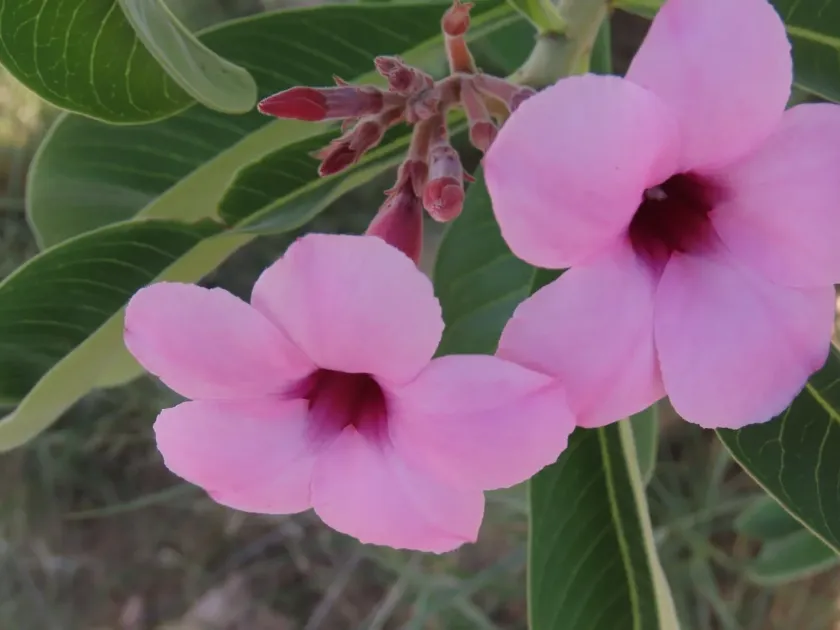
The plant features a distinct, swollen base known as a caudex, which acts as a water storage organ during prolonged dry seasons. Its leaves are generally broader than other Adenium species, and it produces striking, funnel-shaped flowers ranging from light to deep pink.
For successful cultivation, the substrate must be highly porous and fast-draining. A typical mix includes sandy soil, pumice, and expanded clay. The plant thrives when provided with abundant sunlight and requires a distinct dormant period during winter when temperatures drop.
Watering requirements are moderate during the growing season, typically from spring to autumn. It is crucial to allow the soil to dry out completely between waterings to prevent root system degradation, which is a common failure point for succulent enthusiasts.
Historically, the latex sap of this species has been utilized by indigenous populations for traditional purposes, including hunting. In modern horticulture, it is highly valued by collectors for its sculptural form and its resilience to extreme heat.
Main diseases and pests
The primary threats to Adenium boehmianum are fungal pathogens, specifically those causing stem and root rot. These occur predominantly when the plant is kept in overly damp conditions or poor-ventilated environments, preventing evaporation.
Pest issues include sap-sucking insects like mealybugs and spider mites. These pests thrive in dry indoor conditions. Effective management involves using systemic insecticides and maintaining proper hygiene within the greenhouse or collection area.