
Sweet flag
Acorus calamus L.
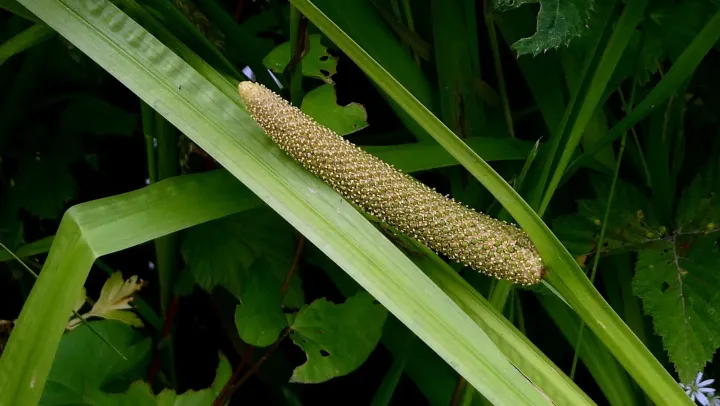
Description
Sowing dates
Sweet flag (Acorus calamus L.), a member of the Acoraceae family, is propagated primarily through vegetative division in agricultural settings. The optimal time for planting is early spring as buds begin to stir or late autumn before the onset of dormancy.
Rhizome segments, typically 15 to 20 cm in length, are planted directly into moist, organic-rich substrates or shallow water edges. A planting depth of 10-15 cm is sufficient to ensure stability and encourage root establishment in the water-saturated environment.
For commercial production, a spacing of 60-70 cm between rows is recommended to provide sufficient room for rhizome expansion. This spacing also simplifies maintenance tasks and prevents overcrowding in the wetland habitat.
During the first growing season, careful weed control is essential to allow the young plants to establish themselves without competition. The water level should remain consistent to promote rapid growth and prevent stress to the root system.
A typical sweet flag plantation is maintained for 5 to 8 years before replanting is necessary. Periodic harvesting and division of rhizomes are required to keep the bed productive and prevent the roots from becoming overly dense.
Growing requirements
Sweet flag is an obligate hydrophyte, which means it requires constant moisture to thrive. Ideal sites include the banks of ponds, irrigation canals, or dedicated wetland basins where water levels can be precisely managed.
The crop performs best in fertile, silty, or peaty soils with a neutral to slightly acidic pH. Poorly drained, waterlogged conditions are not just acceptable but preferred, provided the water is clean and rich in nutrients.
Exposure to full sun is necessary for the accumulation of essential oils, particularly the compounds responsible for the characteristic aroma of the rhizome. While the plant can tolerate partial shade, productivity is significantly higher in sunny locations.
The plant is highly cold-hardy and survives winter temperatures in temperate zones, provided the rhizomes remain protected by water or snow cover. It is an extremely resilient species once established in its preferred environment.
Water quality is a critical factor in cultivation, as the rhizomes can absorb contaminants. Cultivators must ensure that the water source is free from industrial pollutants and agricultural runoff to maintain the purity required for medicinal use.
Yield
Yields of sweet flag reach maturity between the third and fifth years of growth. This represents the peak of both rhizome volume and the concentration of secondary metabolites within the plant tissue.
Typical harvests range from 10 to 20 tons of fresh rhizomes per hectare. Following washing, trimming, and processing, the final dry yield usually represents 25-30 percent of the initial harvested weight.
Soil nutrient levels, particularly nitrogen and organic matter, strongly influence biomass production. However, farmers must balance growth with quality, as excessive nitrogen can sometimes dilute the potency of the aromatic essential oils.
Optimal stand density is crucial for consistent yields. Overcrowded beds result in smaller, thinner rhizomes that are more difficult to clean and process, whereas well-managed stands provide uniform, high-quality material.
Monitoring the hydrology of the site throughout the season ensures a steady growth rate, which is the primary factor in achieving predictable annual harvest volumes from the established plantation.
Main diseases and pests
Sweet flag is remarkably resistant to most common crop diseases, likely due to the natural antimicrobial properties of its rhizomes. However, fungal rot can occur in stagnant water if conditions become anaerobic or if the root system is damaged.
Small mammals and rodents are the primary pests, as they often forage on the fleshy, nutrient-dense rhizomes. In some regions, certain insect larvae may feed on the young foliage, though this rarely poses a major economic threat.
Common diseases generally manifest as decay at the rhizome level, often introduced by physical damage during mechanical harvesting or weeding. These localized infections can spread if the plant density is too high.
Sanitation is the primary method of disease prevention in sweet flag culture. Removing severely damaged tissue and maintaining good water circulation help prevent the buildup of pathogens in the substrate.
Chemical control is rarely utilized in sweet flag fields. Because the roots are used for medicinal purposes, maintaining an organic-compliant environment is essential to meet quality and safety standards.
Harvesting
Harvesting takes place in late autumn, typically from September through November, when the foliage begins to wither. At this time, the concentration of essential oils and other active compounds in the rhizome is at its highest.
Mechanical equipment, such as specialized rakes or adapted diggers, is used to extract the rhizomes from the saturated soil. The harvested material is immediately washed in clean water to remove mud and extraneous debris.
Post-harvest processing involves cutting away dead rootlets and rinsing the rhizomes thoroughly. Drying must occur promptly in well-ventilated areas or low-temperature dryers, keeping the heat below 40 degrees Celsius to preserve volatile oils.
After drying, the rhizomes are sorted and cleaned to ensure only high-quality material enters the supply chain. Proper storage in cool, dark, and moisture-free environments is necessary to prevent spoilage.
High-quality dried rhizomes can be stored for several years if protected from humidity and pests, maintaining the integrity of the plant's active aromatic profile throughout the storage period.