
Acineta chrysantha
Acineta chrysantha
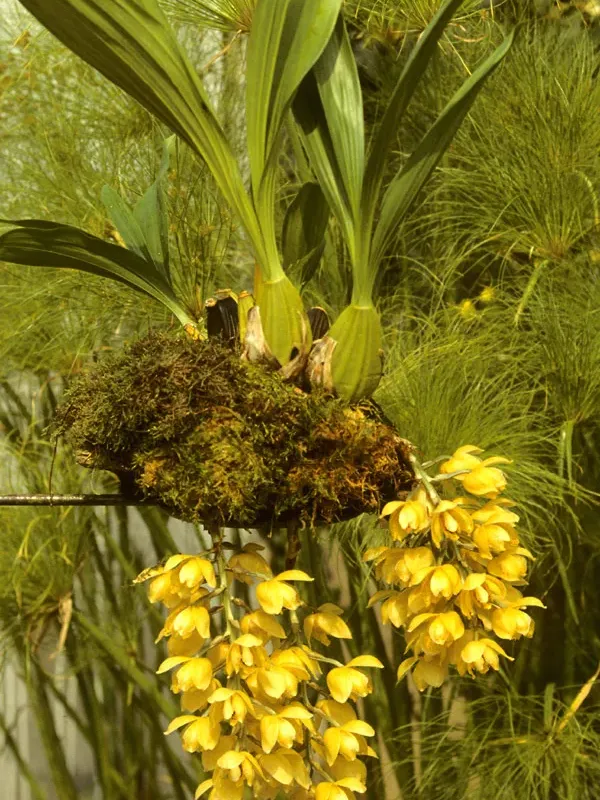
Description
Growing requirements
Acineta chrysantha is a fascinating epiphytic orchid species belonging to the Orchidaceae family. It is native to the tropical cloud forests of Central America, specifically regions in Costa Rica and Panama, where it thrives in humid, shaded environments at mid-elevations.
The plant is characterized by robust, clustered pseudobulbs and large, pleated leaves. Its most distinctive feature is the pendulous inflorescence that grows downwards through the bottom of the basket, producing large, waxy, golden-yellow flowers that emit a strong, spicy, chocolate-like fragrance.
For successful cultivation, Acineta chrysantha requires a high-humidity environment, ideally maintained between 70% and 85%. It thrives in intermediate temperature ranges, preferring daytime temperatures of 22–26°C and a significant nocturnal temperature drop to stimulate flowering.
Given the pendulous growth habit of its flower spikes, this orchid must be grown in hanging slatted baskets. The potting medium should consist of high-quality fir bark mixed with charcoal and sphagnum moss to provide optimal aeration and moisture retention while preventing water stagnation.
Standard agrotechnical practices include consistent watering during the growing season and a slight reduction in water during the winter dormant phase. Proper air circulation is mandatory to prevent the leaves from drying out and to ensure the overall health of the root system.
Main diseases and pests
The primary pests affecting this species include spider mites and scale insects, which often proliferate in environments with inadequate air movement. Monitoring the underside of the leaves and the base of the pseudobulbs is essential for early pest management.
Fungal pathogens such as Fusarium or Phytophthora can cause significant damage if the plant is subjected to poor drainage or prolonged cold, wet conditions. Maintaining a clean growing environment and using sterilized tools for maintenance helps mitigate these risks.