
Achyranthes aspera
Achyranthes aspera L.
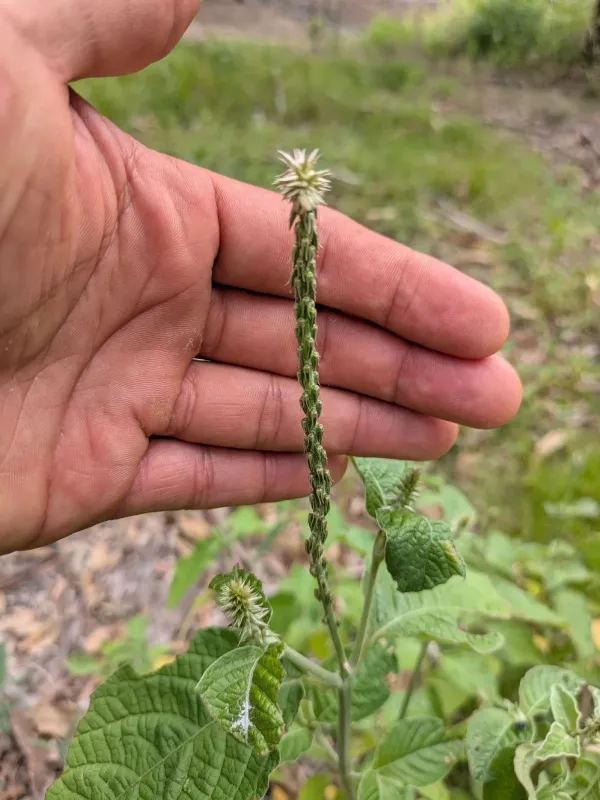
Description
Sowing dates
Achyranthes aspera, commonly known as prickly chaff flower, belongs to the Amaranthaceae family. It is a perennial herb that is often managed as an annual in various agricultural settings.
Sowing should take place in the spring once soil temperatures reach a stable 15–18°C. Early planting allows for a longer growing season and better biomass accumulation.
Seeds are sown at a depth of 1–2 cm. The plant displays good germination vigor, though consistent soil moisture is essential during the initial stages of seedling establishment.
For commercial production, a row spacing of 40–50 cm is recommended to ensure that plants have sufficient space to develop their characteristic broad, leafy canopy.
Proper field preparation, including light cultivation to create a fine tilth, ensures better seed-to-soil contact and more uniform germination across the field.
Growing requirements
This species thrives in full sunlight and warm environments. It is highly adaptable but performs best in well-drained, fertile loam soils with a neutral pH balance.
Water requirements are moderate. While the plant possesses a degree of drought tolerance, consistent irrigation during dry spells significantly improves the yield of harvestable material.
Good soil aeration is critical for healthy root growth. Heavy, waterlogged soils should be avoided, as they can lead to root rot and other physiological stressors.
The plant is known for its ability to grow in various climates, ranging from tropical to warm-temperate zones, provided it is protected from frost during the early growth stages.
Incorporate well-composted organic matter into the soil prior to planting to enhance nutrient availability and support the vigorous growth of the plant throughout the season.
Main diseases and pests
Achyranthes aspera is generally considered a hardy plant with few serious disease issues, making it a low-maintenance option for herbal crop production.
In humid conditions, fungal diseases such as powdery mildew may occasionally appear, though these are typically managed through proper spacing and field sanitation.
Insect pests are rarely a significant concern due to the plant's high content of natural chemical compounds, such as alkaloids and saponins, which act as natural deterrents.
Weed management is most important in the first few weeks after emergence to ensure that the young seedlings do not have to compete for resources, light, or nutrients.
Regular field scouting is recommended to ensure early detection of any physiological issues, though preventative cultural practices usually suffice for sustainable management.
Harvesting
The optimal harvest time for Achyranthes aspera is during the full flowering stage, as this is when the concentration of medicinal phytochemicals is at its peak.
Harvest involves cutting the aerial parts of the plant, leaving about 10–15 cm of stem above the soil surface to protect the base of the plant if multi-cut harvesting is intended.
Post-harvest processing involves rapid drying in a well-ventilated, shaded environment to prevent the degradation of active compounds and ensure the final product's quality.
Once dried, the crop is cleaned to remove any debris or discolored plant parts, then processed into bundles or specific herbal formulations for commercial distribution.
The plant is highly valued in pharmaceutical and traditional medicine sectors for its astringent, anti-inflammatory, and antiseptic properties, which are derived from its leaves and seeds.