
Zosima absinthiifolia
Zosima absinthiifolia
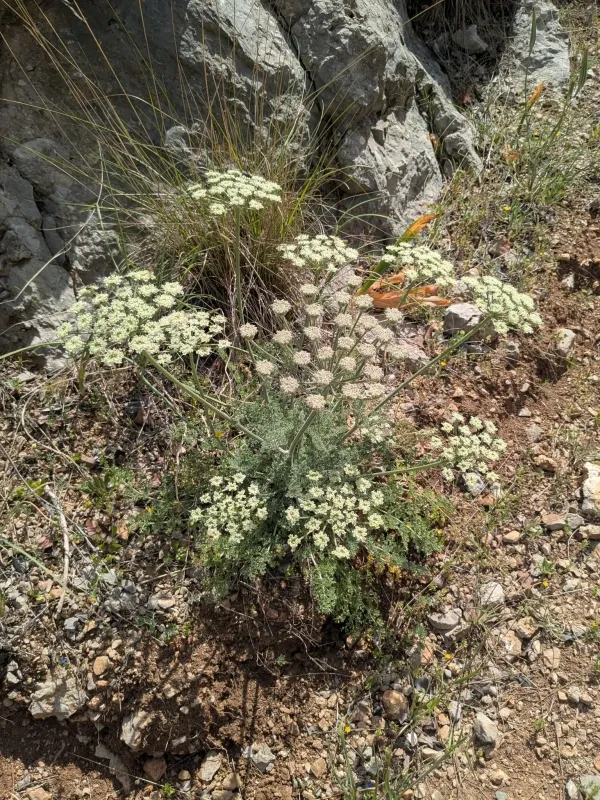
Description
Sowing dates
Sowing of Zosima absinthiifolia is best carried out in autumn (winter sowing), which ensures natural stratification of seeds, a prerequisite for a high germination rate in spring.
Spring sowing is possible, but it requires thorough seed preparation, including soaking and artificial stratification for several weeks at low temperatures.
Seeds should be planted at a depth of 1–2 centimeters in well-prepared soil with a fine-grained structure and adequate moisture to promote successful emergence.
The planting scheme must account for the habit of the mature plant, as it develops a large basal rosette of leaves and a robust flowering stem that requires significant space.
Optimal plant density helps minimize competition for sunlight and nutrients, ensuring consistent growth and development across the field.
Growing requirements
Zosima absinthiifolia belongs to the Apiaceae family and is a typical xerophytic species adapted to arid environmental conditions.
The plant prefers open, sunny areas, as shading tends to cause shoot elongation and reduces the concentration of bioactive compounds in the plant tissues.
Soil requirements include well-drained loamy or sandy soils with a neutral to slightly alkaline reaction, reflecting its natural habitat conditions.
The crop exhibits high drought resistance due to its deep taproot system, which allows it to access moisture from deeper soil layers.
Proper soil aeration is crucial for development, as water stagnation in the root zone can trigger fungal infections and cause plant mortality.
Main diseases and pests
In waterlogged conditions, Zosima absinthiifolia is susceptible to root rot caused by soil-borne pathogenic fungi, such as species of the genus Fusarium.
The aerial parts of the crop can be affected by powdery mildew, particularly during periods of sharp temperature fluctuations and high air humidity during flowering.
Among pests, the greatest threat comes from insects that attack umbelliferous crops, including various species of aphids and true bugs that suck sap from young shoots.
Larvae of certain beetle species may damage the root system, negatively impacting the life cycle of the perennial plant and its winter survival rate.
Disease prevention involves crop rotation, ensuring adequate spacing between plants to allow for airflow, and the use of healthy, disease-free planting material.
Harvesting
The economic use of Zosima absinthiifolia as medicinal raw material requires strict adherence to harvest schedules, corresponding to the phase of maximum active compound accumulation.
Flowers and shoot tops are typically harvested during peak bloom when the concentration of essential oils and coumarins in the plant tissues is at its maximum.
Drying of the raw material should take place in well-ventilated, dark rooms or specialized dryers at temperatures not exceeding 40 degrees Celsius to preserve the chemical profile.
The roots of the plant, which are also of pharmaceutical interest, are harvested either in early spring before the growing season or in late autumn after the growth cycle concludes.
Correctly harvested and dried material possesses a characteristic aroma and retains its biological properties for 1–2 years when stored in hermetically sealed containers.