
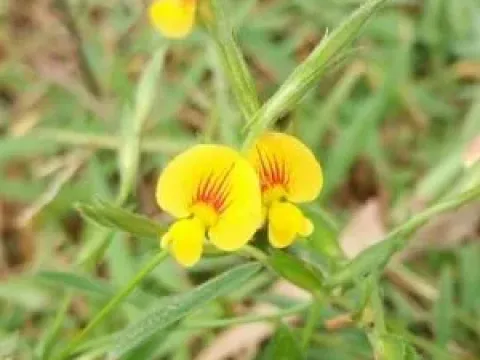
Zornia
Zornia J. F. Gmel.
Zornia is a thermophilic plant, so sowing should be scheduled when stable warm temperatures are established, avoiding any risk of night frost. The beginning of the rainy season in tropical and subtropical regions is considered the optimal time for planting.
What the section contains

Zornia
To ensure high germination rates, the soil must be sufficiently warm and moist. Scarification of the seeds is highly recommended before sowing, as they possess a thick, impermeable coat that can delay emergence.
The seeding rate should be adjusted according to the intended use: lower rates are used for establishing pastures, while higher rates are preferred for hay production. Row spacing can vary based on the sowing method and available agricultural equipment.
In commercial cultivation, seeds are sown at a shallow depth of 1–2 centimeters. Surface sowing requires mandatory rolling of the soil to ensure firm contact between the seed and the soil substrate, which promotes consistent moisture uptake.
Fields must be kept clear of weeds until the crop establishes sufficient vegetative cover to outcompete unwanted plants. Rapid growth typically commences within 3 to 4 weeks after the emergence of seedlings.
Zornia belongs to the Fabaceae family and encompasses various annual and perennial herb species. These plants are uniquely adapted to nutrient-poor soils where many other crop species fail to thrive.
The culture exhibits high tolerance to acidic soil conditions, making it a viable candidate for land reclamation in tropical latosols and sandy environments. It forms an effective symbiotic relationship with nitrogen-fixing bacteria, significantly improving soil fertility.
Plants thrive in sunny locations and do not tolerate heavy shade. While Zornia is capable of enduring short periods of drought, regular moisture is essential to achieve high biomass productivity.
The optimal temperature range for active growth is between +25 and +30 degrees Celsius. Development slows significantly or ceases entirely when temperatures drop below +15 degrees Celsius.
Proper drainage is a critical requirement for success, as waterlogged conditions in the root zone can trigger fungal infections. In high-rainfall areas, sloping plots should be prioritized for cultivation.
Biomass yield of Zornia is directly dependent on soil fertility and the consistency of rainfall. Under favorable conditions, the crop forms a dense carpet of foliage, providing high nutritional value for livestock.
Used as fodder, Zornia is highly palatable to cattle and small ruminants, whether provided as fresh forage or dried hay. The protein content remains remarkably stable even in later stages of plant maturation.
To maximize yields, periodic application of phosphorus and potassium fertilizers is recommended, as these nutrients stimulate robust root development and symbiotic activity with beneficial soil microbes.
When used as pasture, a rotational grazing strategy must be implemented to prevent the depletion of root reserves. Maintaining an optimal stubble height after grazing facilitates rapid regrowth and long-term stand longevity.
The seed yield potential is substantial, though harvesting can be challenging due to the asynchronous maturation of the pods. Careful monitoring of the flowering phase is necessary to determine the precise harvest time.
The primary threats to Zornia crops include root rots, which typically occur when agronomic practices are neglected or if the soil remains excessively wet for extended periods.
Young seedlings are particularly vulnerable to insect pests, including various leaf beetles and weevils that feed on the soft vegetative tissue, potentially causing significant stand density reduction.
In environments with high humidity, plants may be susceptible to powdery mildew and various leaf spot diseases, both of which reduce photosynthetic capacity and degrade the quality of the forage.
Competition from aggressive grass weeds during the initial establishment phase is a significant management challenge. Timely hand-weeding or the use of selective herbicides may be required.
Biological pest control is preferred over chemical interventions, especially since Zornia is frequently used in pasture systems where maintaining a clean, chemical-free food source for livestock is a priority.
Harvesting for hay should be performed during the peak flowering phase, when the concentration of nutrients in the stems and leaves is at its maximum level. This timing ensures the highest feed quality.
Mowing is best performed in the morning hours after the dew has evaporated, which speeds up the drying process in the windrows and helps prevent leaf shattering during handling.
For seed production, harvesting should begin once the pods turn brown and the moisture content of the seeds drops to levels safe for storage, reducing the risk of fungal growth during the curing process.
If harvesting for seed, a multi-stage approach is recommended: mowing into windrows for field curing, followed by threshing using stationary equipment to minimize losses due to pod shattering.
Well-cured Zornia hay stores exceptionally well in bales or bulk under cover. With protection from moisture and direct precipitation, the nutritional quality remains consistent throughout the winter months.